

What's Happening?
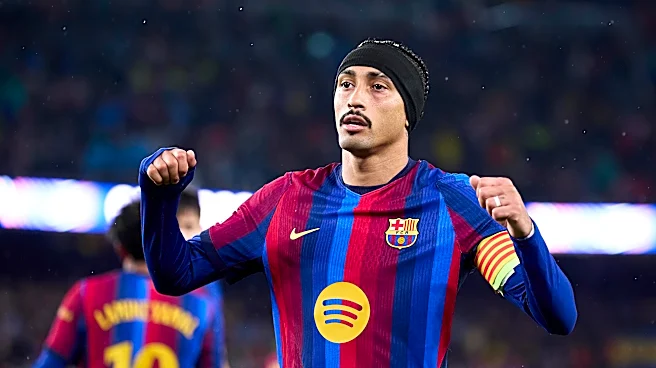
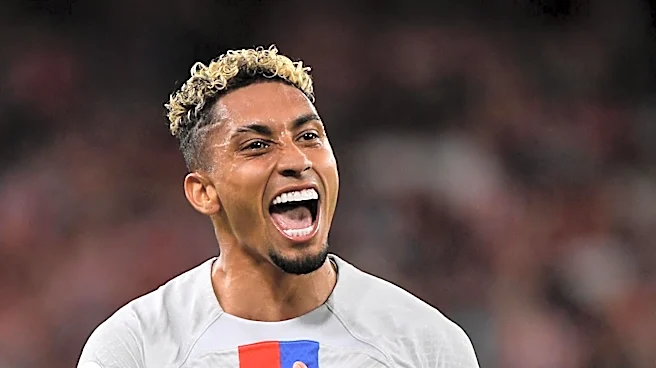
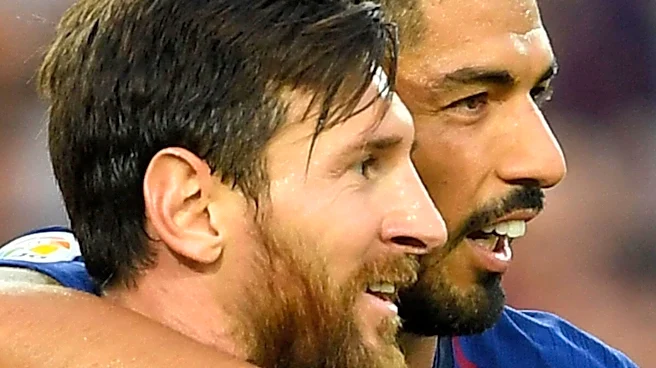
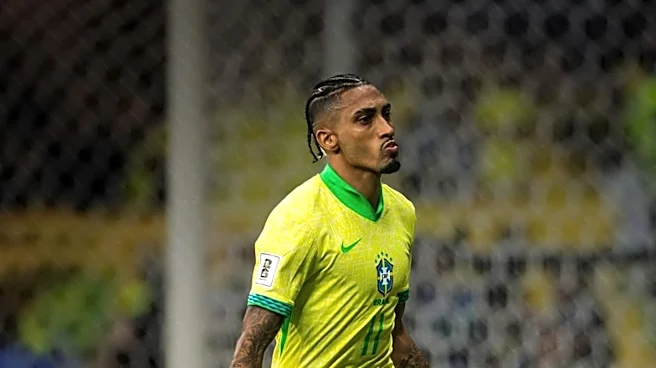
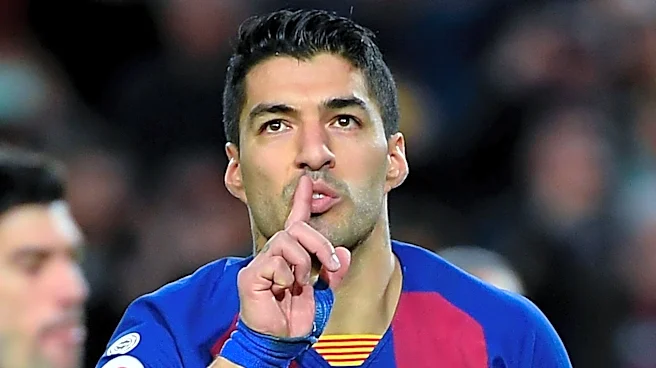
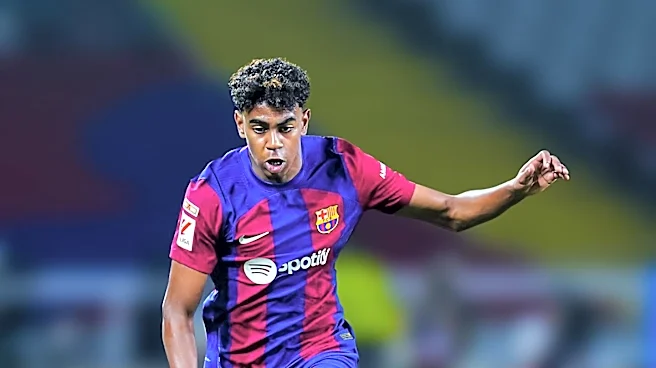
Former Barcelona striker Luis Suarez has publicly shared his surprise and admiration for Raphinha's successful adaptation to a center-forward position at FC Barcelona. According to an interview reported by Mundo Deportivo, Suarez noted that while it is not Raphinha's natural
position, the Brazilian forward has excelled, scoring 19 goals in 14 matches this season. Suarez highlighted Raphinha's intelligence, speed, and finishing ability, which have allowed him to become a crucial player and a leader for the team. This unexpected performance has led the club to re-evaluate its need for a new striker, with Raphinha effectively filling the 'false nine' role. Suarez's comments underscore the significant impact Raphinha has had on Barcelona's offensive strategy.
Why It's Important?
Raphinha's successful transition to a central attacking role holds significant implications for FC Barcelona's strategic planning and financial decisions. His unexpected effectiveness as a center-forward could reduce the club's immediate need to invest heavily in a new striker, potentially freeing up funds for other areas of team development or debt management. This internal solution to a key positional need demonstrates the value of player versatility and adaptability in modern football. For Raphinha, this new role elevates his status within the team, making him a more indispensable asset and potentially increasing his market value. His performance also provides a blueprint for other clubs facing similar challenges, showcasing how existing talent can be repurposed to address tactical gaps, thereby influencing player development and transfer market strategies across the sport.
What's Next?
Moving forward, Raphinha's continued performance in the center-forward role will be closely monitored by FC Barcelona's coaching staff and management. His sustained success could solidify his position as the primary option for the 'false nine' role, influencing future transfer market decisions regarding attacking players. The club will likely continue to leverage his versatility, potentially exploring other tactical variations that incorporate his unique skill set. Additionally, Raphinha's elevated profile and leadership on the field could lead to increased responsibilities within the team, both on and off the pitch. His adaptation may also inspire other players to develop their versatility, potentially shifting trends in player training and recruitment across top-tier football.
Beyond the Headlines
Raphinha's unexpected success as a center-forward transcends mere tactical adjustments; it highlights a broader trend in modern football where traditional positional boundaries are becoming increasingly fluid. This development challenges conventional scouting and player development models, emphasizing the importance of adaptability, football intelligence, and a diverse skill set over rigid adherence to a single position. It also underscores the psychological aspect of player performance, as Raphinha's ability to embrace and excel in a new role demonstrates mental fortitude and a strong work ethic. This shift could lead to a re-evaluation of how talent is identified and nurtured, potentially favoring players who exhibit versatility and a high football IQ, ultimately shaping the future landscape of professional football tactics and player roles.