






What's Happening?
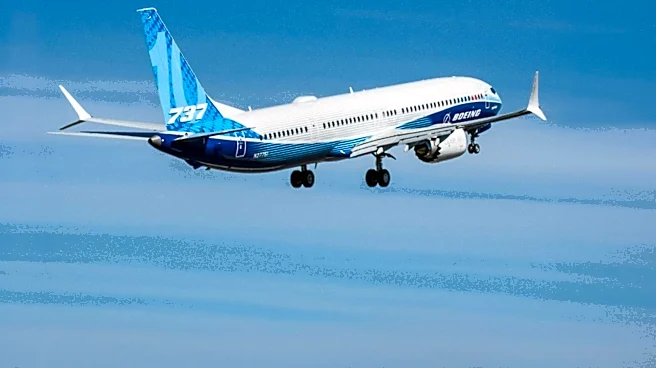
United Airlines, alongside Southwest Airlines, has informed Boeing that it will not accept new 737 MAX aircraft equipped with a recently identified flight-management-computer software issue. This problem, currently under review by the Federal Aviation
Administration (FAA), could cause automated vertical navigation to disengage during a specific missed-approach scenario. Boeing has stated that the issue does not pose an immediate safety threat and has provided operators with information to reinforce existing pilot procedures. The affected software versions are 14 and 14.1. United Airlines has clarified that its currently operating 737 MAX aircraft do not use these problematic software versions. Boeing is actively working on a permanent software update while the FAA conducts its independent review.
Why It's Important?
This decision by major U.S. carriers like United Airlines highlights the ongoing scrutiny and safety concerns surrounding Boeing's 737 MAX fleet. While United's existing fleet is unaffected, the refusal to accept new deliveries with the software glitch could further delay Boeing's production and delivery schedules, impacting its financial performance and reputation. For the airline industry, continued issues with new aircraft models can lead to fleet planning disruptions, potential capacity constraints, and increased operational costs. Public confidence in the 737 MAX, which was severely shaken by previous incidents, could also be further eroded, affecting passenger bookings and the broader travel sector. This situation underscores the critical importance of software integrity and rigorous testing in aviation manufacturing.
What's Next?
Boeing is expected to continue its efforts to develop and implement a permanent software update for the affected 737 MAX jets. The FAA's ongoing review will be crucial in determining the timeline for this resolution and the conditions under which new aircraft deliveries can resume. Airlines like United will likely maintain their stance until the software issue is fully resolved and certified by regulatory bodies. This could lead to further negotiations between Boeing and its airline customers regarding delivery schedules and potential compensation for delays. The situation may also influence the certification process for other 737 MAX variants, such as the MAX 10 and MAX 7, which Boeing is currently awaiting approval for.
Beyond the Headlines
The recurring software issues with the Boeing 737 MAX aircraft raise deeper questions about the certification processes for complex aviation technology and the balance between rapid production and stringent safety standards. This incident, even if deemed not an immediate safety threat, contributes to a narrative of persistent challenges for Boeing, potentially affecting its long-term market dominance and competitive landscape. It also emphasizes the interconnectedness of the aerospace supply chain, where a software glitch from a manufacturer can have significant ripple effects on airline operations and financial stability. The focus on software integrity will likely intensify across the aviation industry, leading to more rigorous development, testing, and oversight protocols for future aircraft designs.