









What's Happening?
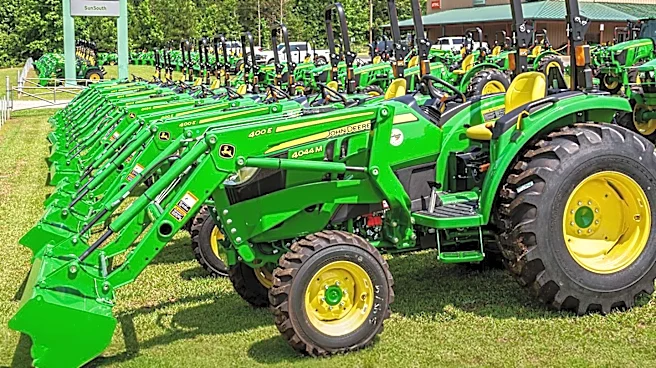
Deere & Company has agreed to settle a lawsuit filed by the Federal Trade Commission (FTC) and five U.S. states, which accused the company of monopolizing repair services for its farm equipment. The settlement mandates that Deere provide farmers and independent
repair providers with access to the same diagnostic and repair resources available to its authorized dealers for a decade. This move is part of a broader effort initiated by the Biden administration to address anti-competitive practices in the agriculture sector. The lawsuit, which began in January 2025, alleged that Deere's practices led to service delays and increased costs for farmers. As part of the settlement, Deere will also pay $1 million to cover the legal fees of the states involved. The settlement awaits approval from U.S. District Judge Iain Johnston in Rockford, Illinois.
Why It's Important?
This settlement is significant as it addresses long-standing concerns about the 'right to repair' in the agricultural sector. By allowing farmers to repair their own equipment or use independent service providers, the settlement could lead to reduced costs and increased efficiency for farmers. This change is expected to enhance competition in the agricultural repair market, potentially lowering prices and improving service quality. The FTC's action reflects a commitment to reducing monopolistic practices that can harm consumers and small businesses. For Deere, this settlement could mean a shift in its business model, potentially affecting its revenue from repair services.
What's Next?
The settlement requires judicial approval, which, if granted, will enforce the new repair rights for farmers and independent providers. Deere will need to implement systems to ensure compliance with the settlement terms, including training authorized dealers to provide necessary resources. The agricultural community and independent repair businesses are likely to monitor the implementation closely, as it could set a precedent for other industries facing similar 'right to repair' issues. Additionally, the outcome may influence future regulatory actions by the FTC and other government bodies concerning consumer rights and competition.