




What's Happening?
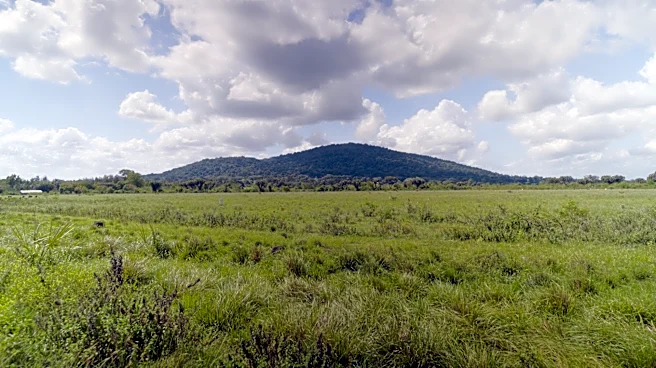
Kenya's government has chosen a consortium of U.S. companies as the preferred bidder to develop niobium and rare earth deposits at Mrima Hill in Kwale County. The mining ministry issued a notice of its intention to award the project to the Frontier Minerals
Consortium, which includes Frontier Minerals LLC, Bunker Hill Mining Corp., ReElement Technologies, and American Resources Corp. The ministry clarified that this notice is not a license and requires the consortium to engage with local communities and obtain all necessary consents before applying for a prospecting license. However, residents and farmers have expressed concerns about potential land loss, and elders from the local Digo community worry about damage to the Mrima Hill Sacred Grove, a national monument since 1992. They report a lack of information from the government regarding the project's content, making it difficult to provide informed consent. A previous mining attempt at the site in 2013 was rejected due to its protected status, and a Kenyan civil society group, the Centre for Litigation Trust, has asked the High Court to suspend the proposed agreement until residents are consulted.
Why It's Important?
This project is significant as countries, including the U.S., are actively seeking to secure critical rare earth minerals used in electric vehicle motors, wind turbines, and defense technologies, aiming to reduce reliance on China's dominance in this sector. The development of Mrima Hill's deposits could bolster the U.S. supply chain for these essential minerals. However, the project faces substantial local opposition and legal challenges, highlighting the complex interplay between national economic interests, environmental protection, and community rights. The lack of transparent communication and consultation with local residents could lead to prolonged disputes, delays, and potential social unrest, impacting the project's viability and the reputation of the involved companies. The legal challenge regarding the court's jurisdiction also underscores the potential for a protracted legal battle, which could set precedents for future resource extraction projects in the region.
What's Next?
The Frontier Minerals Consortium must now undertake extensive community engagement and secure all requisite consents before it can apply for a prospecting license. This process will be critical in addressing the concerns of local residents, farmers, and the Digo community regarding land rights and the protection of the Mrima Hill Sacred Grove. The legal challenge initiated by the Centre for Litigation Trust, seeking to suspend the agreement until community consultation occurs, will also need to be resolved. The outcome of this court case could significantly impact the project's timeline and feasibility. The Kenyan government will be under pressure to ensure transparency and adherence to environmental regulations, especially given the site's protected status and the history of a previous failed mining attempt. The success of this project will depend heavily on effective stakeholder engagement and the resolution of legal and environmental issues.
Beyond the Headlines
The Mrima Hill project exemplifies the global tension between the demand for critical minerals and the protection of indigenous rights, cultural heritage, and environmental sustainability. The designation of the Mrima Hill Sacred Grove as a national monument adds a layer of complexity, raising questions about whether mining can coexist with protected status under existing laws. The government's decision to choose investors before formal consent processes, as stated by the mining ministry, highlights a potential conflict between economic development priorities and community-led decision-making. This situation could trigger broader discussions about the ethical sourcing of minerals and the responsibility of international corporations in respecting local communities and environmental safeguards. The long-term implications could include a re-evaluation of mining policies, increased advocacy for indigenous land rights, and the development of more stringent international standards for resource extraction projects in culturally and environmentally sensitive areas.