





What's Happening?
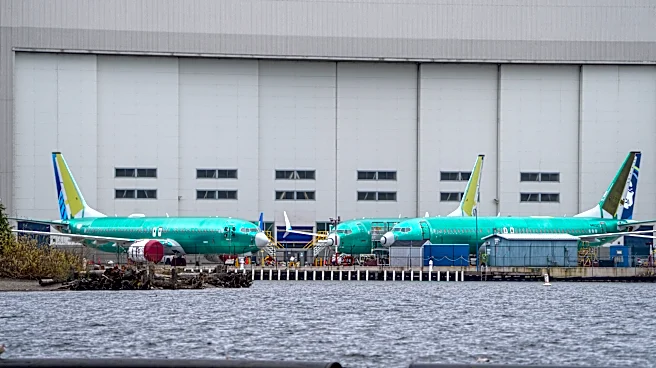
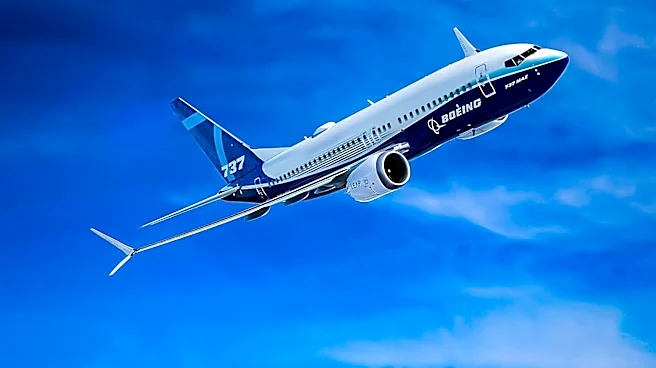
Boeing CEO Kelly Ortberg has informed investors that the company now anticipates reaching its production target for the 737 MAX in early 2027, a delay from previous expectations. This announcement comes as Boeing faces scrutiny regarding its production timelines
and workforce adjustments. The company has not ruled out additional mass layoffs beyond the current round, which is scheduled for December 9. Earlier in November, Boeing announced plans to cut 5% of its approximately 50,000 commercial aircraft division employees through retirements and layoffs. According to Stephanie Pope, CEO of the commercial aircraft division, these cuts are necessary due to the slower-than-expected increase in 737 MAX production, which is a primary revenue generator for the company. Boeing is currently attempting to increase 737 production from 42 to 47 aircraft per month.
Why It's Important?
This delay in reaching the 737 MAX production target has significant implications for Boeing, its supply chain, and the broader aerospace industry. The 737 MAX is a critical product for Boeing, and any production slowdowns can impact the company's financial performance, market share, and ability to meet customer demand. The potential for further layoffs could also affect thousands of employees and their families, leading to economic uncertainty in regions heavily reliant on Boeing's manufacturing operations. For airlines, these delays could mean longer waiting times for new aircraft, potentially impacting their fleet expansion plans and operational costs. The situation also highlights ongoing challenges in the aerospace manufacturing sector, including supply chain disruptions and regulatory hurdles, which can have ripple effects throughout the U.S. economy.
What's Next?
Boeing is expected to continue its process of adjusting its workforce to align with customer commitments, with details to be communicated to affected employees as decisions are finalized. The company has indicated that layoffs will be targeted at functions being phased out or discontinued, rather than being generalized. The Society of Aerospace Engineering Employees (SPEEA) has been informed by Boeing managers that the employment situation across all units of the commercial aircraft division is under review. However, the company has stated there will be no voluntary layoff programs or severance agreements. The aerospace industry will closely monitor Boeing's progress in ramping up 737 MAX production and any further announcements regarding its workforce strategy.
Beyond the Headlines
The ongoing production challenges and workforce adjustments at Boeing underscore a broader trend of volatility within the manufacturing sector, particularly in high-tech and capital-intensive industries. The company's decisions reflect a complex interplay of market demand, regulatory oversight, and internal operational efficiencies. The focus on targeted layoffs suggests a strategic effort to streamline operations and adapt to evolving production realities, rather than a blanket reduction in force. This approach could lead to a more specialized and efficient workforce in the long term, but it also raises questions about the future of employment in the aerospace sector and the need for continuous skill development and adaptation among employees. The situation also highlights the critical role of the 737 MAX in Boeing's recovery and its competitive standing in the global aviation market.