






What's Happening?
Uruguay's National Administration of Power Plants and Electrical Transmissions (UTE) is initiating a new 99 MW solar tender, aiming to attract approximately $75 million in private investment. This initiative seeks to expand the country's generation capacity
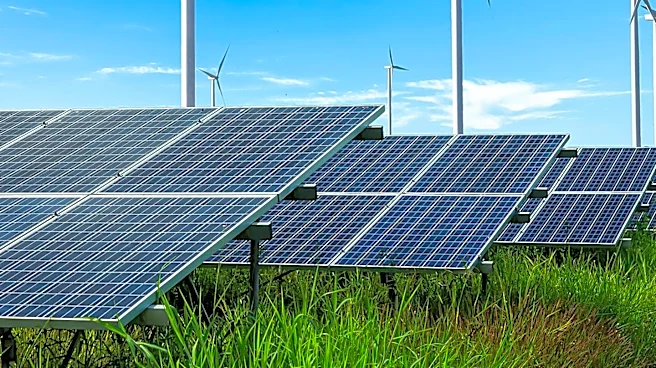
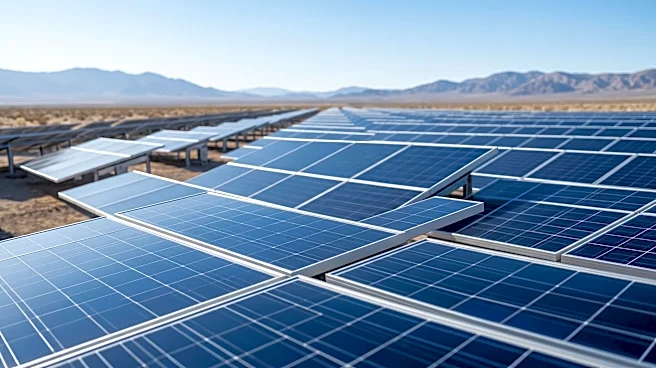
by integrating more photovoltaic projects, which UTE identifies as the most economically viable option for electricity supply expansion. The tender is designed to encourage participation from both existing park owners and new developers, with an estimated investment of around $758,000 per megawatt of injection capacity. The final investment figures will depend on the awarded projects. The power purchase agreements (PPAs) for these projects will span 20 years, incorporating a price reduction in the final five years to reflect the decreasing costs of new technologies. During this period, the base payment will be 40% of the original price, subject to adjustment mechanisms. This strategy underscores UTE's commitment to reducing electricity supply costs through renewable energy.
Why It's Important?
This significant investment in solar energy by UTE highlights a broader global trend towards renewable energy adoption and its potential to influence energy markets and policy. For the U.S., such international developments can offer insights into successful renewable energy integration strategies and market dynamics. The emphasis on private investment in Uruguay's energy sector could serve as a model or a point of comparison for U.S. utilities and policymakers considering similar public-private partnerships for infrastructure development. The structured PPA with a price reduction mechanism in later years reflects an evolving understanding of renewable energy economics, where initial costs are higher but long-term operational costs are lower. This approach could inform U.S. energy policy discussions on incentivizing long-term renewable energy projects and managing electricity costs. Furthermore, the move towards solar power reduces reliance on fossil fuels, aligning with global climate goals and potentially influencing U.S. energy companies to accelerate their own transitions to cleaner energy sources to remain competitive in a globalized market.
What's Next?
Proposals for the three power plants, each with a 33 MW injection capacity located in Tacuarembó, Florida, and eastern Uruguay, can be submitted until January 27, 2027, with separate awards for each facility. UTE anticipates that the tender will attract a diverse range of bidders, including current park owners and new market entrants, fostering competition and potentially leading to more favorable commercial terms for electricity supply. The success of this tender will likely influence future renewable energy expansion plans in Uruguay and potentially serve as a case study for other nations in Latin America and beyond. The long-term PPAs, with their built-in price adjustments, will be closely watched to assess their effectiveness in balancing developer returns with consumer costs. Additionally, UTE's ongoing energy storage projects are expected to complement these solar initiatives, further enhancing grid stability and the integration of intermittent renewable sources.
Beyond the Headlines
The UTE solar tender reflects a strategic shift towards sustainable energy that extends beyond immediate economic benefits. By prioritizing photovoltaic parks, Uruguay is not only aiming to reduce electricity costs but also to mitigate environmental impact, aligning with global efforts to combat climate change. This move could position Uruguay as a leader in renewable energy in the region, potentially attracting further green investments and fostering technological innovation. The structured PPA, with its price reduction clause, also signals a maturing renewable energy market where the long-term cost-effectiveness of solar technology is increasingly recognized. This could set a precedent for future energy contracts, encouraging developers to focus on efficiency and innovation to maintain profitability over extended periods. The broader implication is a gradual decoupling of energy production from fossil fuel price volatility, leading to greater energy independence and security for nations that successfully transition to renewable-dominated grids.