




What's Happening?
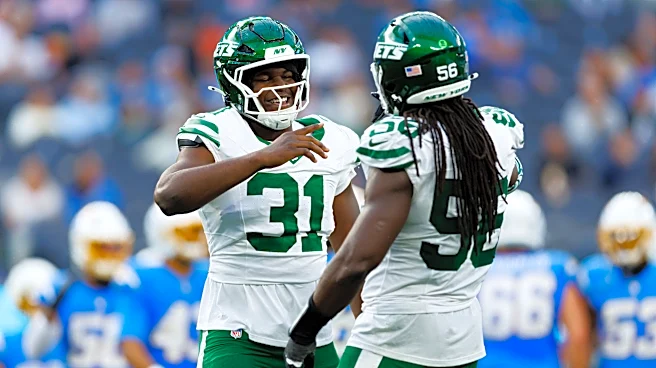
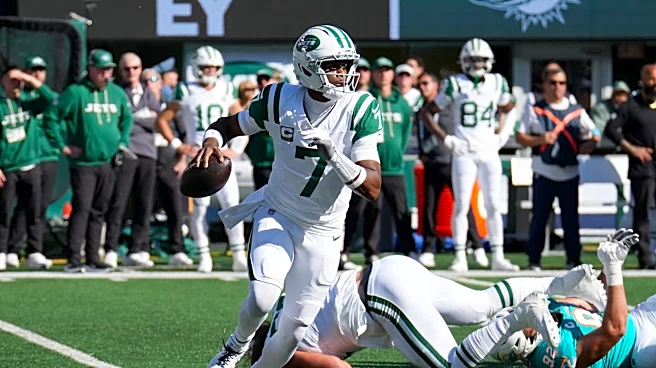
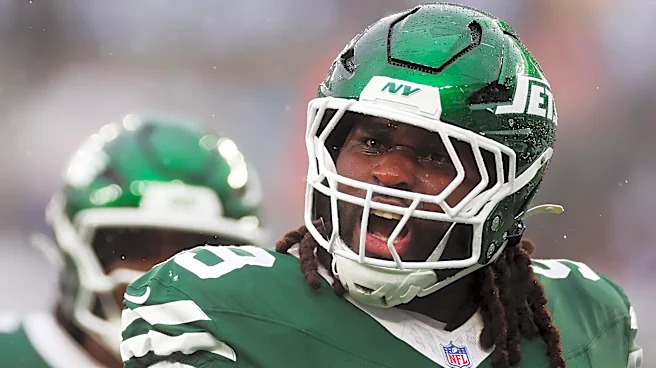
The New York Jets have officially activated defensive tackle T'Vondre Sweat from injured reserve, making him eligible to play in the upcoming game against Miami. This move comes after Sweat missed four games due to a knee injury sustained in the previous
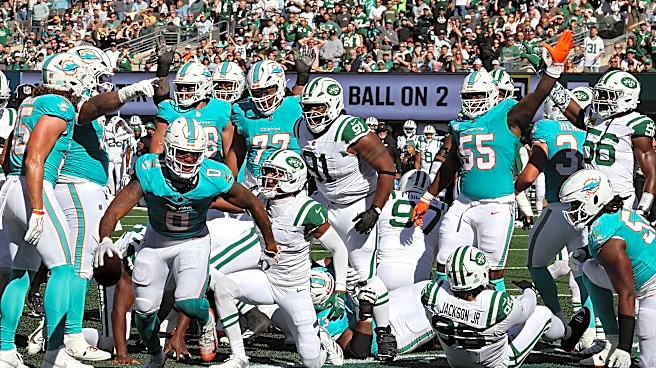
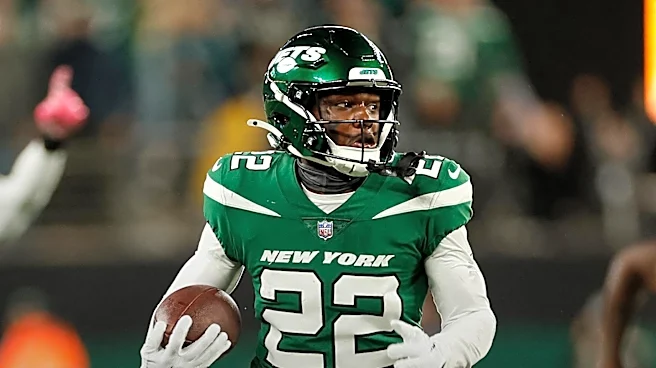
encounter with the Dolphins. Amanda Vogt confirmed Sweat's activation to the 53-man roster, noting his 248 total snaps and 17 tackles this season. Concurrently, the Jets have ruled out David Onyemata for the Miami game, preventing a full reunion of the defensive front. Sweat's return is seen as a significant boost for the team's run defense, especially given Miami's previous success on the ground against the Jets, with Ollie Gordon II rushing for 103 yards in their last meeting. The activation follows Sweat's 21-day practice window, allowing him to prepare for his return to active play.
Why It's Important?
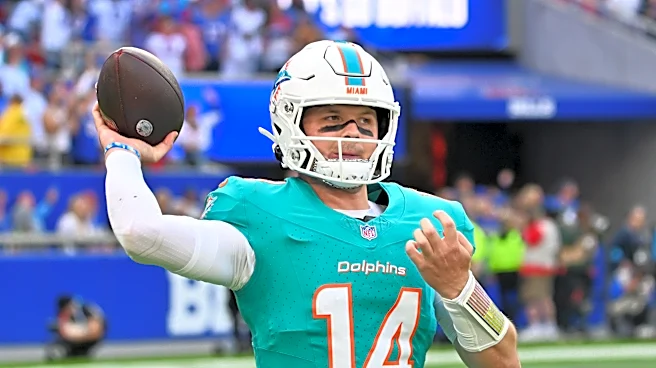
The activation of T'Vondre Sweat is crucial for the Jets, particularly in strengthening their interior defensive line against the run. As Aaron Glenn, per the team notebook, emphasized, building a defense through the middle is paramount for controlling the line of scrimmage and creating opportunities for pass rushers. Sweat's 366-pound presence is expected to help contain opposing running backs, a weakness exploited by Miami in their last game. With Miami now starting Kyle McCord, who has a lower completion percentage, forcing them to rely less on their run game could be a strategic advantage for the Jets. The absence of David Onyemata, however, means the defensive line will still not be at full strength, raising questions about the overall effectiveness of the unit despite Sweat's return. This move highlights the ongoing challenges NFL teams face in managing player injuries and maintaining defensive integrity throughout the season.
What's Next?
The immediate focus will be on how T'Vondre Sweat integrates into the Jets' defensive rotation during the upcoming game against Miami. While his activation is confirmed, the extent of his playing time and his impact on the run defense remain to be seen. The Jets will be looking to leverage Sweat's return to counter Miami's ground attack and put pressure on their new starting quarterback, Kyle McCord. The team will also continue to monitor the status of other injured players, such as Harrison Phillips, who was listed as questionable. The performance of the defensive line in this game will be a key indicator of whether Sweat's return can significantly alter the team's defensive capabilities and help them secure a victory against a familiar opponent. The JetNation discussion will likely continue to track Sweat's performance and its implications for the team's overall defensive strategy.
Beyond the Headlines
The strategic decision to activate T'Vondre Sweat underscores the complex balance NFL teams must strike between player health and competitive necessity. Bringing a player back from injury too soon risks re-injury, while delaying their return can hinder team performance. This situation also highlights the evolving nature of defensive schemes in professional football, where the ability to control the interior of the line is increasingly valued for its ripple effect on both run defense and pass rush. The Jets' reliance on Sweat to bolster their run defense against a division rival like Miami illustrates the high stakes involved in every personnel decision. Furthermore, the ongoing injury concerns within the defensive line could prompt broader discussions about player load management and the long-term health of athletes in a physically demanding sport.