


What's Happening?
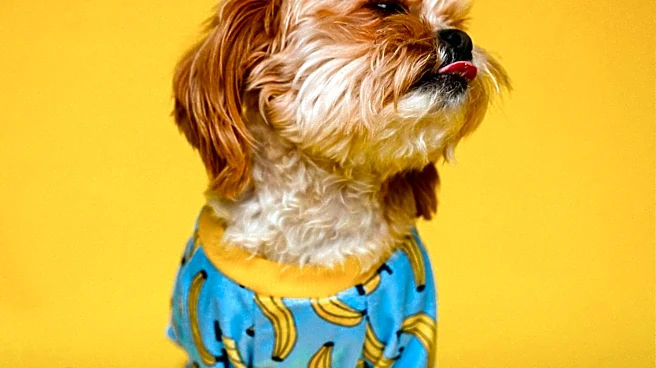
During London Fashion Week, designer Chopova Lowena incorporated dogs dressed in unique outfits, including inflatable coats and parachutes, into their runway show. This unconventional presentation drew significant attention, with one dog reportedly causing
a brief halt to the show. The event highlighted a blend of high fashion with playful and unexpected elements, showcasing a departure from traditional runway norms. The collection itself featured various innovative designs, but the canine models became a focal point, adding a memorable and quirky twist to the presentation. This move by Chopova Lowena contributed to the broader narrative of London Fashion Week, which also featured other notable designers and collections.
Why It's Important?
The inclusion of dogs in designer outfits at London Fashion Week by Chopova Lowena is important as it signifies a growing trend of brands seeking novel ways to capture public attention and differentiate themselves in a competitive industry. This approach can generate significant media buzz and social media engagement, extending the reach of the fashion show beyond traditional fashion circles. For the U.S. fashion market, such innovative presentations can influence trends in marketing and creative direction, potentially inspiring American designers and brands to explore more unconventional methods for showcasing their collections. It also reflects a broader cultural shift towards integrating pets into various aspects of lifestyle and luxury, which can open new market segments for pet-related fashion and accessories. The spectacle also underscores the evolving definition of 'fashion' itself, moving beyond mere clothing to encompass performance art and experiential marketing.
What's Next?
Following Chopova Lowena's unique presentation, it is likely that other designers and brands, both in the U.S. and internationally, will observe the public and media reception to such unconventional runway elements. This could lead to an increase in experimental presentations during future fashion weeks, as brands look to replicate the viral success and attention generated. There might be a trend towards incorporating more unexpected elements, such as animals or non-traditional models, to create memorable moments. Additionally, the success of this approach could spur collaborations between fashion houses and pet accessory brands, or even lead to dedicated pet fashion lines from high-end designers. The fashion industry may continue to push boundaries, seeking to blend entertainment and spectacle with traditional garment display to engage a wider audience.
Beyond the Headlines
The use of dogs in fashion shows, particularly in elaborate outfits, touches upon deeper cultural and ethical considerations. While it can be seen as a creative and endearing spectacle, it also raises questions about animal welfare in the context of entertainment and luxury. The ethical treatment of animals in such high-stress environments, and whether their participation is truly voluntary or comfortable, could become a point of discussion. Furthermore, this trend reflects the increasing anthropomorphism of pets in Western societies, where animals are often treated as extensions of human identity and style. This can have implications for the pet industry, driving demand for luxury pet products and services. It also highlights the fashion industry's continuous quest for novelty and shock value to maintain relevance and generate conversation in a saturated media landscape, potentially blurring the lines between art, commerce, and ethical responsibility.