






What's Happening?
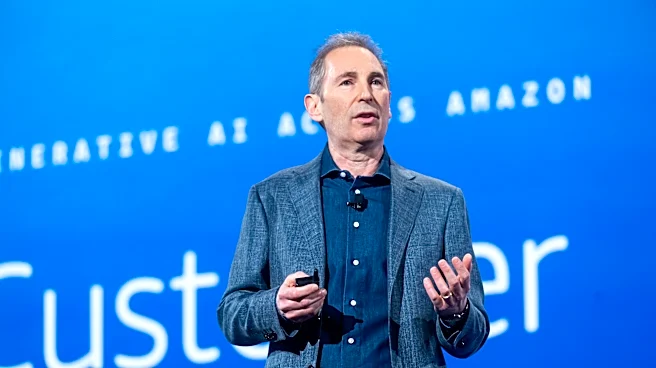
Amazon CEO Andy Jassy has stated that third-party shopping agents must provide a 'fair exchange of value' to be allowed access to Amazon's platform. This declaration comes as Amazon expresses concerns that these agents may bypass advertisements on its
store, potentially impacting the company's substantial annual advertising revenue, which stands at $68.6 billion. Amazon is currently evaluating access for specific agents, such as Muse, due to perceived risks to its ad revenue, search quality, and direct customer relationships. The company's stance indicates a strategic effort to protect its advertising business model while navigating the evolving landscape of online shopping intermediaries. This development is part of broader discussions within Amazon regarding its operational policies and how external entities interact with its vast e-commerce ecosystem. The company recently reported third-quarter 2026 net sales of $201.9 billion, with Amazon Web Services (AWS) sales reaching $46.0 billion, highlighting the diverse revenue streams Amazon manages.
Why It's Important?
This policy clarification from Amazon CEO Andy Jassy is significant for several reasons. Firstly, it underscores Amazon's commitment to safeguarding its $68.6 billion annual advertising revenue, a critical component of its financial success. Any disruption to this stream could have substantial implications for the company's profitability and investor confidence. Secondly, it signals a potential shift in how third-party shopping agents operate within the e-commerce giant's ecosystem, possibly requiring them to integrate more directly with Amazon's advertising framework or offer other tangible benefits. This could lead to increased scrutiny and potentially new business models for these agents. For consumers, changes in how these agents function might affect their shopping experience, potentially altering how deals are found or how product information is presented. The move also reflects Amazon's broader strategy to maintain control over its platform's user experience and data, ensuring that external tools align with its business objectives and do not detract from its core services.
What's Next?
In the immediate future, Amazon is expected to continue evaluating specific third-party shopping agents, including Muse, to determine if they meet the 'fair exchange of value' criteria outlined by CEO Andy Jassy. This evaluation process will likely involve detailed discussions and potentially new agreements between Amazon and these agents. Stakeholders, including the third-party shopping agent industry, will be closely watching Amazon's decisions, as they could set precedents for how such services operate across major e-commerce platforms. It is also possible that Amazon will develop clearer guidelines or technical requirements for agents seeking integration, ensuring they contribute positively to Amazon's ad revenue and customer experience. The outcome of these evaluations could lead to some agents being granted access under new terms, while others might be restricted or denied, potentially reshaping the competitive landscape for online shopping assistance tools.
Beyond the Headlines
Beyond the immediate concerns of ad revenue, Amazon's stance on third-party shopping agents touches upon broader themes of platform control, data ownership, and the future of online retail. This move highlights the ongoing tension between platform providers seeking to monetize their ecosystems and third-party services aiming to enhance user experience, sometimes by circumventing existing revenue models. Ethically, it raises questions about the balance between a company's right to protect its business interests and the potential for innovation from external developers. Legally, future disputes could arise regarding anti-competitive practices if Amazon's policies are perceived as unduly restrictive. Culturally, this development reflects a growing trend where major tech platforms are asserting more control over how their services are accessed and utilized by external applications, potentially leading to a more closed digital environment where innovation is increasingly dictated by platform owners.