










What's Happening?
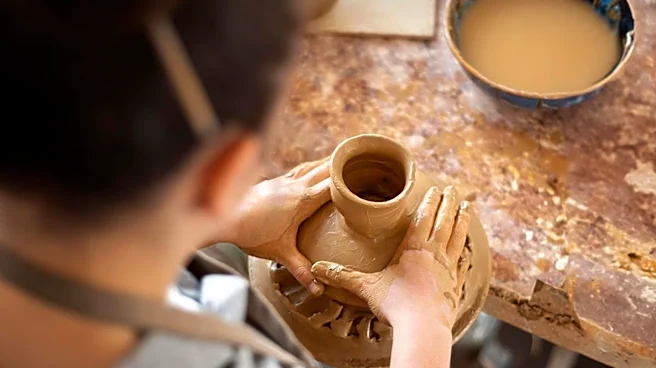
A unique approach to pottery crafting has emerged with the use of a microwave kiln, as detailed in a personal account of experimenting with this unconventional method. The author describes the process of using a miniature pottery wheel and a microwave kiln to create
small ceramic pieces. The process involves throwing clay on a miniature wheel, which requires delicate handling due to the small scale. The microwave kiln is used to fire these pieces, a method that is both innovative and challenging. The author notes the unpredictability of this method, as rapid temperature changes can cause the kiln to crack, and moisture in the clay can lead to explosive results. Despite these challenges, the author has successfully created several small ceramic pieces, though they are not food-safe due to the kiln's inability to reach the high temperatures required for full vitrification.
Why It's Important?
This development in pottery crafting highlights a creative and accessible approach to ceramics, allowing hobbyists to experiment with pottery at home without the need for a traditional kiln. The use of a microwave kiln democratizes the art of ceramics, making it more accessible to those who may not have the resources or space for a full-sized kiln. This method also shortens the time required to complete ceramic pieces, offering a quicker turnaround for artists and hobbyists. However, the process comes with safety concerns, such as the release of fumes and the risk of thermal shock, which necessitates careful handling and protective equipment. The broader impact of this innovation could lead to increased interest in ceramics as a hobby, as well as inspire further experimentation with unconventional crafting methods.
What's Next?
As more individuals explore the use of microwave kilns, there may be a rise in community workshops and online tutorials to share best practices and safety tips. Manufacturers of pottery equipment might also innovate to create more user-friendly and safer microwave kilns. Additionally, there could be a market for specialized glazes and clays designed specifically for use with microwave kilns, addressing some of the current limitations such as the inability to create food-safe ceramics. The crafting community may also see an increase in the sharing of creative projects and ideas, fostering a collaborative environment for pottery enthusiasts.
Beyond the Headlines
The use of microwave kilns in ceramics could have cultural implications, as it allows for the preservation and adaptation of traditional pottery techniques in a modern context. This method could also encourage sustainable practices by reducing the energy consumption associated with traditional kilns. Furthermore, the accessibility of this technique may lead to a resurgence in interest in handmade crafts, promoting a shift towards valuing artisanal skills and the uniqueness of handcrafted items. As this method gains popularity, it may also influence educational programs, integrating microwave kiln techniques into art curriculums to inspire the next generation of ceramic artists.