



What's Happening?
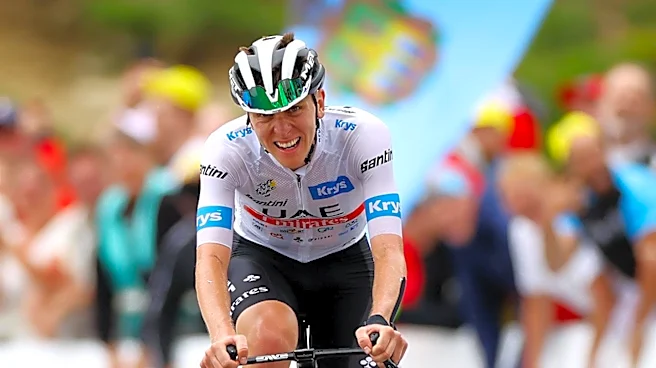
The 2026 Tour de France concluded with Tadej Pogacar securing his fifth victory, equaling the record held by cycling legends. The race, spanning from Barcelona to Paris, was marked by extreme heat and forest fires, leading to modifications in several
stages. Pogacar dominated the race, wearing the yellow jersey for 17 out of 21 days and winning five stages. The event also highlighted the emergence of young talents like Paul Seixas and the challenges posed by climate change, as the race faced unprecedented heat and fire-related disruptions.
Why It's Important?
Pogacar's victory cements his status as one of the greatest cyclists, while the race's challenges underscore the growing impact of climate change on global sporting events. The modifications due to heat and fires reflect the need for sports organizations to adapt to environmental changes. This year's Tour de France serves as a case study for future events, emphasizing the importance of sustainability and climate resilience in sports planning. The race also showcased the potential of young cyclists, indicating a promising future for the sport.
What's Next?
The Tour de France organizers may need to consider further adaptations to address climate-related challenges, such as altering race schedules or routes to mitigate heat exposure. The success of young cyclists like Paul Seixas suggests a shift in competitive dynamics, potentially leading to more diverse and unpredictable outcomes in future races. Additionally, the cycling community may push for more robust anti-doping measures, as the sport continues to grapple with its historical issues.