
What's Happening?
Innovations for Poverty Action (IPA) has completed an evaluation of a credit product designed for climate-resilient construction in the Philippines. Concurrently, IPA is developing research focused on climate and
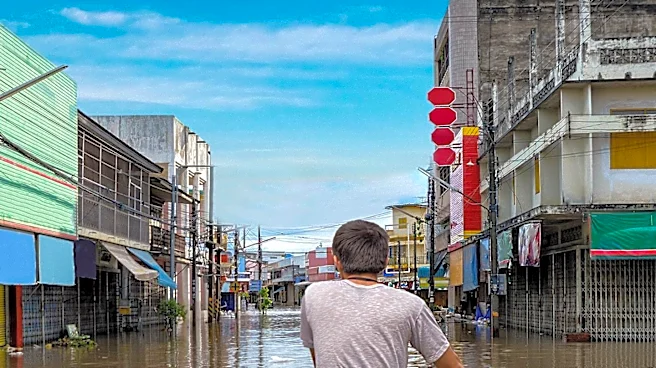
health microinsurance for small firms within the country. This initiative is part of a broader effort to adapt financial tools to help households build resilience against increasing climate shocks. The research aims to address gaps in understanding how financial services can support household resilience, particularly in non-agricultural sectors where evidence is currently limited. The organization emphasizes that while many necessary financial tools exist, their effectiveness can be significantly enhanced by tailoring them to the specific ways climate risks materialize and to the realities of the consumers and providers involved.
Why It's Important?
The development and evaluation of climate-resilient financial products are crucial for mitigating the economic impact of climate change on vulnerable populations. In the U.S. context, similar initiatives could inform strategies for disaster preparedness and recovery, especially in regions prone to extreme weather events. By understanding how credit and insurance products can be adapted to climate risks, policymakers and financial institutions can develop more effective mechanisms to protect communities and businesses. The focus on microinsurance for small firms also highlights the importance of supporting small and medium-sized enterprises (SMEs), which are often disproportionately affected by climate disasters and play a vital role in local economies. The findings from the Philippines could offer valuable insights for U.S. programs aimed at enhancing financial resilience against climate shocks.
What's Next?
IPA plans to continue building evidence to address key research questions, including identifying which financial instruments are most effective for different types and severities of climate shocks, and under what conditions these services can be commercially sustainable while benefiting consumers. They are also exploring the trade-offs of financial products on adaptive changes and the functionality of digital infrastructure during widespread shocks. The ongoing research in the Philippines, particularly outside the agricultural sector, is expected to provide critical data. Funders, financial service providers, and researchers are encouraged to collaborate with IPA to further this work, suggesting a continued focus on refining and expanding climate-ready financial solutions globally, with potential implications for U.S. policy and financial product development.
Beyond the Headlines
The initiative underscores a growing recognition that financial inclusion is a critical component of climate resilience. Beyond immediate recovery, these financial tools can foster long-term adaptation by enabling households and small businesses to invest in protective measures and diversify their livelihoods. The ethical dimension involves ensuring that these products are genuinely beneficial and accessible to the most vulnerable, avoiding situations where basis risk or complex terms undermine their utility. Legally, this could lead to new regulatory frameworks for climate-specific financial products. Culturally, it may shift perceptions of risk and responsibility, encouraging proactive engagement with financial planning for climate impacts. The long-term implication is a move towards a more integrated approach where financial services are intrinsically linked with environmental sustainability and disaster risk reduction.