






What's Happening?
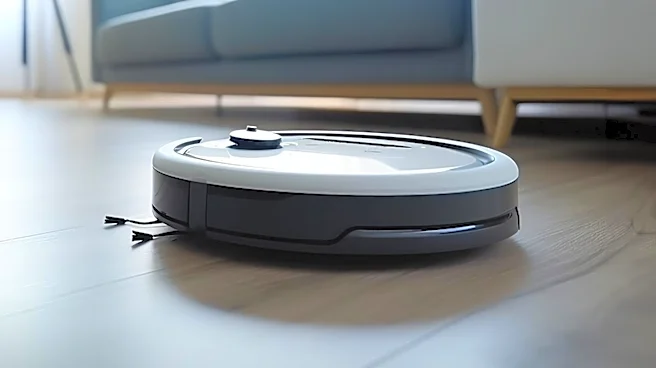
Dyson has launched its new Nurovi line of robot vacuums, introducing three models that incorporate lidar-based navigation and a Twin-Capture system for enhanced cleaning. This marks a significant technological shift for Dyson, as previous robot vacuums from
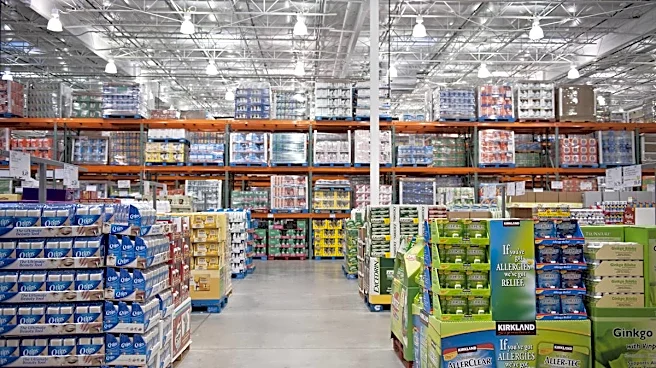
the company relied on HD cameras for navigation. The new lineup includes the R1 Nurovi Dry, a vacuum-only model priced at $550; the R2 Nurovi Wash+Dry, a vacuum-mop hybrid available exclusively at Costco for $700; and the R3 Nurovi Spot+Scrub UV, a premium vacuum-mop hybrid with UV-assisted stain detection, retailing for $1,200. All three models share a light gray color scheme and feature canister-style base stations. The Twin-Capture system is designed to effectively pick up dust and debris from both hard floors and carpets. The R3 model further distinguishes itself with AI capabilities to identify up to 200 types of household substances and uses UV light to locate stains.
Why It's Important?
The introduction of Dyson's Nurovi robot vacuum line signifies a notable advancement in the smart home appliance market, particularly in the U.S. This move by a prominent brand like Dyson, known for its premium home technology, could intensify competition and drive innovation among robot vacuum manufacturers. The shift to lidar navigation across all models, combined with the Twin-Capture system, aims to address common consumer pain points related to cleaning effectiveness and navigation accuracy. The exclusive availability of the R2 Nurovi Wash+Dry at Costco highlights strategic retail partnerships that can influence market distribution and consumer access. For consumers, these new models offer a range of features and price points, from basic vacuuming to advanced vacuuming and mopping with stain detection, potentially making sophisticated home cleaning technology more accessible while also pushing the boundaries of what robot vacuums can achieve in terms of intelligence and cleaning performance.
What's Next?
Dyson plans to make the R1 and R3 Nurovi models available on its website and potentially through other retailers, while the R2 will remain a Costco exclusive. Industry experts and consumers will be closely watching for independent reviews and performance comparisons to assess how these new models measure up against existing competitors in the market. The effectiveness of the lidar navigation, the Twin-Capture system, and particularly the R3's UV-assisted stain detection and AI capabilities will be key areas of evaluation. The success of the Nurovi line could influence future product development in the robot vacuum sector, potentially leading other manufacturers to adopt similar advanced navigation and cleaning technologies. Dyson's strategic pricing and feature differentiation across the three models will also be a factor in determining their market penetration and consumer adoption.
Beyond the Headlines
The launch of the Dyson Nurovi line reflects a broader trend in the smart home industry towards integrating more sophisticated AI and sensor technologies into everyday appliances. The use of lidar for navigation, moving away from camera-based systems, suggests a focus on improved privacy and reliability in mapping home environments. The R3's UV-assisted stain detection and AI substance identification capabilities hint at a future where home cleaning devices are not just automated but also intelligent, capable of understanding and responding to specific cleaning challenges. This evolution could lead to a more hands-off and personalized cleaning experience for consumers. However, the higher price point of the R3 model also raises questions about the accessibility of such advanced features and whether the perceived value justifies the cost for the average household. The ongoing development of these technologies could eventually lead to robot vacuums that are seamlessly integrated into smart home ecosystems, offering predictive cleaning and maintenance based on household habits and environmental factors.