






What's Happening?
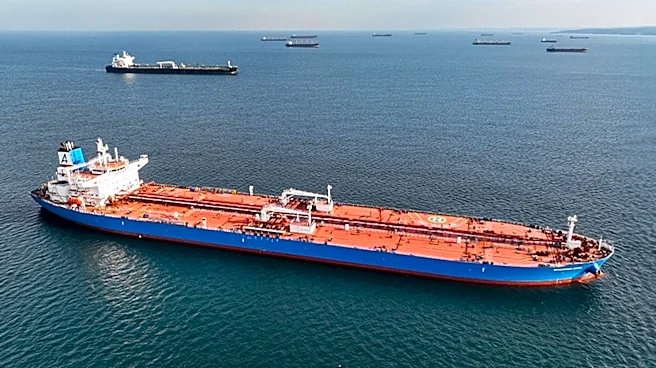
Kuwait Petroleum Corporation (KPC) is actively looking to purchase more ships and improve its supply chain, according to Shaikh Khaled Al-Sabah, the managing director of international marketing for the state-owned energy giant. Speaking at the APPEC Conference,
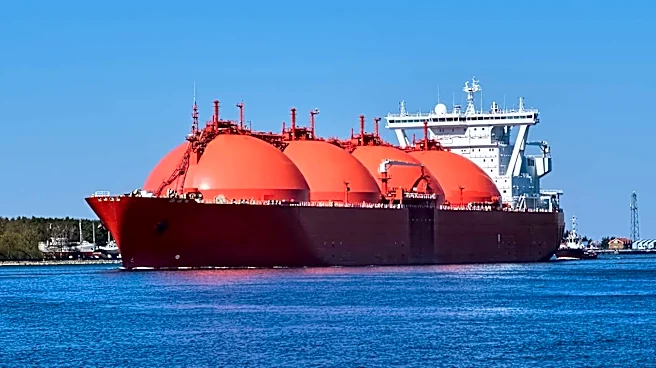
Al-Sabah stated that KPC manages its own fleet and is currently in the market to acquire additional vessels. KPC also explores other options to bolster its supply chain, including the potential construction of pipelines to neighboring countries and the development of a storage facility. These initiatives aim to ensure the consistent supply of crude oil and products to its customers, particularly in scenarios such as a U.S.-Iran conflict. Kpler data indicates that KPC shipped approximately 713,000 barrels per day of fuel and crude last year. Al-Sabah emphasized the strategic advantage of controlling one's own fleet and operations in the current market, where shipping has become a 'very hot commodity.'
Why It's Important?
KPC's move to expand its shipping fleet and enhance its supply chain is a significant development in the global energy market. By increasing its control over transportation logistics, KPC aims to reduce reliance on external shipping providers, thereby gaining greater operational flexibility and potentially mitigating risks associated with geopolitical tensions, such as those in the Strait of Hormuz. This strategy can help stabilize supply to its customers and protect against price volatility in the shipping market. For the U.S. and other global energy consumers, a more resilient and controlled supply chain from a major oil producer like Kuwait could contribute to greater energy security and predictability in oil and fuel markets. The emphasis on owning and operating its fleet reflects a broader trend among national oil companies to integrate more aspects of their value chain.
What's Next?
KPC will likely proceed with its plans to acquire new ships and evaluate the feasibility of constructing pipelines and storage facilities. These efforts are part of a long-term strategy to enhance the corporation's resilience and market position. The expansion of its fleet will involve significant investment and could impact the shipbuilding industry. The potential development of pipelines to neighboring countries and new storage facilities would further diversify KPC's distribution channels, reducing bottlenecks and increasing its capacity to respond to market demands and geopolitical shifts. The market will be watching for announcements regarding specific vessel acquisitions and infrastructure projects, which could signal KPC's commitment to these strategic objectives.
Beyond the Headlines
KPC's proactive approach to supply chain management highlights the increasing awareness among major energy producers of the vulnerabilities inherent in global shipping. Geopolitical instability, such as the U.S.-Iran tensions mentioned by Al-Sabah, can severely disrupt maritime trade routes, leading to supply shortages and price spikes. By investing in its own fleet and infrastructure, KPC is not only securing its commercial interests but also contributing to a more robust global energy supply network. This strategy could inspire other national oil companies to follow suit, potentially leading to a shift in the dynamics of the global shipping industry, with more producers opting for greater vertical integration. The long-term implications include a potential reduction in reliance on third-party carriers and a greater emphasis on self-sufficiency in energy transportation.