







What's Happening?
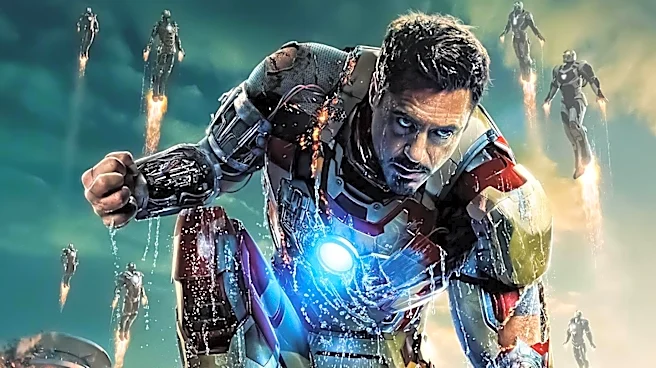
Jon Favreau, director of the first 'Iron Man' film, recently spoke about his initial disagreements with Marvel Studios chief Kevin Feige during the post-production of the 2008 movie. Speaking at the Will Rogers Motion Picture Pioneers Foundation event,
where he presented Feige with the Pioneer of the Year Award, Favreau recalled that Feige frequently pushed for the removal of certain scenes he felt were unnecessary. Favreau admitted that he initially resisted these suggestions, even jokingly asking Feige, 'Why do you hate movies?' The director explained that 'Iron Man' was considered an independent film at the time, and the back-and-forth over editing became a recurring joke between them. Ultimately, Favreau acknowledged that Feige's suggestions proved correct, leading to a significant shift in his approach to filmmaking. He learned the importance of maintaining narrative momentum and avoiding excessive indulgence in the editing process.
Why It's Important?
This insight into the early days of the Marvel Cinematic Universe (MCU) highlights the foundational creative decisions that shaped one of the most successful film franchises in history. Favreau's account underscores Kevin Feige's critical role as a 'quality control central' and his vision for interconnected storytelling, which has been a hallmark of the MCU. The experience not only changed Favreau's directorial perspective, teaching him to prioritize pacing and conciseness, but also established a precedent for the collaborative yet decisive creative leadership that would define Marvel Studios. This approach has allowed the MCU to weave complex narrative arcs across numerous films and series, appealing to a broad global audience and setting new standards for cinematic universes. The success of 'Iron Man' was pivotal, demonstrating that a comic book adaptation could be both critically acclaimed and commercially successful, paving the way for the expansive universe that followed.
What's Next?
While this specific reflection pertains to past events, the ongoing impact of Feige's creative philosophy continues to shape future Marvel Studios productions. The lessons learned from early collaborations, such as the one with Favreau, inform the studio's current strategies for developing new films and Disney+ series. Marvel Studios has several confirmed release dates for the post-Secret Wars era, and productions like 'Daredevil: Born Again' are slated for release in March 2025. The reported filming start for 'Avengers: Secret Wars' in the UK, though uncertain in its exact timing, indicates the continued commitment to large-scale, interconnected storytelling. The studio's future projects will likely continue to reflect the emphasis on narrative efficiency and cohesive universe-building that Feige championed from the outset, ensuring that new installments maintain the established quality and appeal.
Beyond the Headlines
Favreau's anecdote reveals a deeper aspect of creative leadership in a major studio environment. It illustrates how a strong vision, even when initially met with resistance, can ultimately lead to greater artistic and commercial success. The dynamic between Favreau and Feige exemplifies the tension between a director's artistic indulgence and a producer's strategic vision for a broader franchise. This balance is crucial in large-scale cinematic universes, where individual films must contribute to an overarching narrative while also standing alone. Feige's ability to connect storylines and his 'love of storytelling and storytellers' are identified as key factors behind the franchise's enduring global success. This collaborative yet disciplined approach has not only influenced how Marvel films are made but has also set a benchmark for other studios attempting to build their own interconnected universes, highlighting the importance of a clear, consistent creative direction.