








What's Happening?
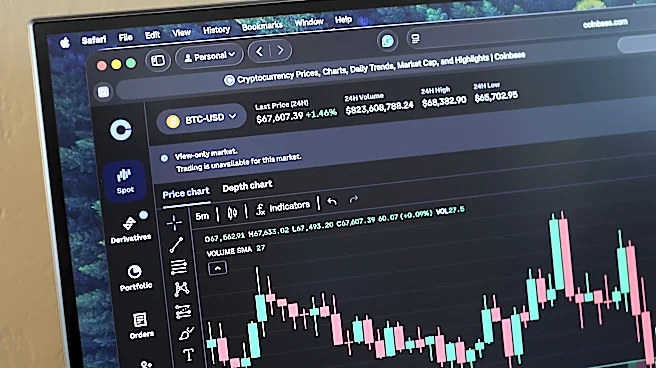
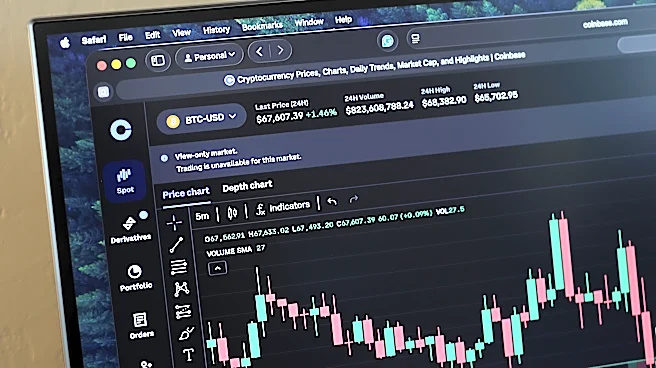
Bitcoin (BTC) has closed at its lowest price in 30 days, trading near $76,000 and currently resting on a significant support level of $76,782. This price floor has historically acted as a turning point, reversing Bitcoin's price four times since mid-March
2025, with the last rebound occurring on September 15. Over the past 30 days, Bitcoin's price has fallen approximately 9%, culminating in its lowest daily close on November 6. The price decline on November 6 was about 0.3%, with Binance trading volume reaching $1.30 billion, close to its 20-day average. The previous week's close, at $78,354, marked the lowest weekly close since September 7. Reports suggest that the decline was influenced by a broader slump in technology equities, a past Binance hack, and diminishing retail investor interest.
Why It's Important?
The $76,782 price floor is a crucial technical indicator for Bitcoin. Its historical ability to halt price declines makes it a key level for traders and investors. A sustained break below this floor could signal a significant shift in market sentiment and potentially lead to further downward price movement, impacting investor confidence and the broader cryptocurrency market. Conversely, if Bitcoin manages to rebound from this level, it would reinforce the strength of this support and could indicate a potential for price stabilization or recovery. The confluence of factors contributing to the decline, including broader tech market trends and waning retail interest, suggests that Bitcoin's price is influenced by both internal crypto market dynamics and external economic forces, making its current position a critical test of its resilience.
What's Next?
The immediate future for Bitcoin hinges on its ability to hold the $76,782 support level. Market participants will be closely monitoring price action around this point for signs of either a rebound or a decisive break downwards. If the price holds, it could lead to a period of consolidation or a gradual recovery. However, if Bitcoin falls below this floor, it may trigger further selling pressure, potentially pushing the price to lower support levels. The sentiment among Binance futures buyers, who are paying near the highest rates in 90 days to maintain positions, indicates a degree of speculative interest, but this could quickly reverse if the price continues to fall. The broader market will also be watching for any shifts in technology equity performance or renewed retail investor engagement, which could influence Bitcoin's trajectory.
Beyond the Headlines
Bitcoin's current struggle at a key support level highlights the ongoing maturation and increasing interconnectedness of the cryptocurrency market with traditional financial markets. The influence of a 'chipmaker-led slump in technology equities' on Bitcoin's price suggests that digital assets are no longer entirely decoupled from broader economic trends. This integration means that factors affecting the tech sector, such as investor sentiment towards growth stocks or macroeconomic concerns, can now have a more direct impact on crypto valuations. Furthermore, the mention of 'fading retail investor interest' points to a potential shift in market dynamics, where institutional participation or larger-scale investment might be playing a more dominant role, making the market less susceptible to rapid retail-driven rallies. This evolving landscape requires investors to consider a wider range of economic indicators beyond just crypto-specific news.