


What's Happening?
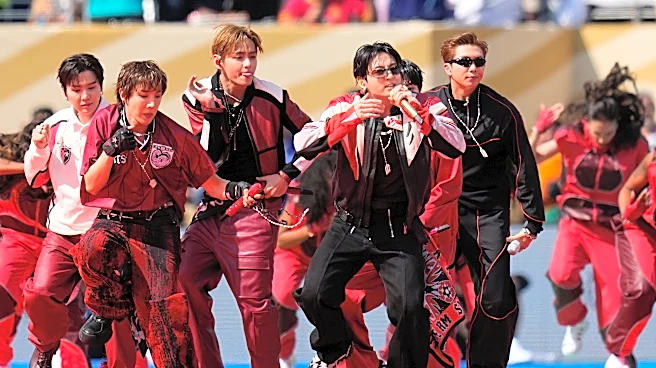
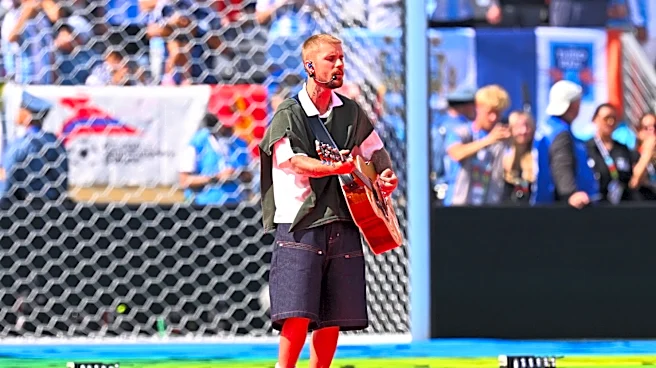
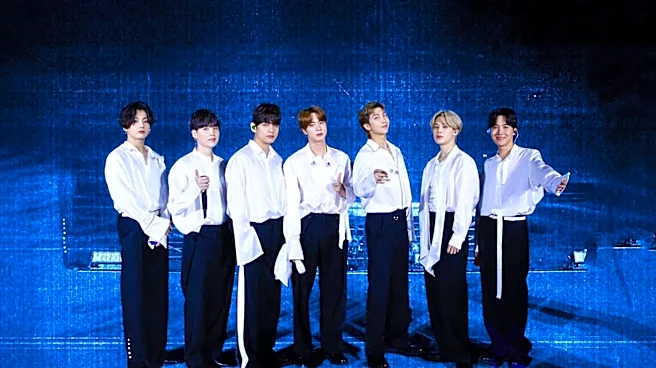
Madonna, Justin Bieber, BTS, and Shakira headlined the first-ever halftime show at the World Cup, held at MetLife Stadium near New York. The performance aimed to emulate the Super Bowl's entertainment style, featuring a packed 11-minute show with each
artist performing for about two minutes. Madonna opened with her hit 'Music,' accompanied by Brazilian soccer legends Ronaldo and Ronaldinho. The show included a diverse lineup, with Venezuelan conductor Gustavo Dudamel leading an orchestra through 'Seven Nation Army,' and BTS performing 'Dynamite.' Shakira and Burna Boy delivered the official World Cup anthem 'Dai Dai,' while the PS22 Chorus and Coldplay's Chris Martin concluded the event with a collaborative performance. The halftime show was part of a broader effort to enhance the entertainment value of the World Cup, traditionally focused solely on soccer.
Why It's Important?
The introduction of a halftime show at the World Cup signifies a shift towards integrating more entertainment elements into global sporting events, potentially increasing viewership and engagement. This move could attract a broader audience, including those who may not be traditional soccer fans, thereby expanding the event's cultural and commercial reach. The involvement of high-profile artists like Madonna and Shakira highlights the event's global appeal and the potential for cross-cultural collaborations. This development may influence future sporting events to incorporate similar entertainment features, enhancing their marketability and fan experience.
What's Next?
Following the success of this halftime show, future World Cup events may continue to feature similar performances, potentially setting a new standard for entertainment at international sports events. Organizers might explore partnerships with more global artists to maintain and grow audience interest. Additionally, the positive reception could encourage other sports leagues to adopt similar entertainment strategies, further blurring the lines between sports and entertainment industries.