


What's Happening?
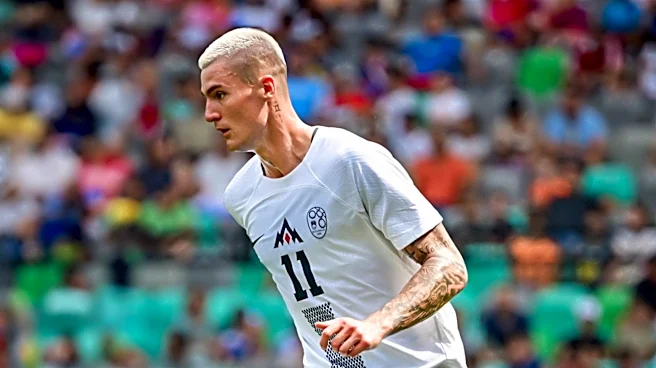
Manchester United is preparing to sign at least one new striker in the January transfer window, a decision prompted by the ongoing injury setback of forward Benjamin Sesko. According to Fabrizio Romano, Sesko is expected to be out until at least January,
and potentially longer, as the club prioritizes his full recovery to prevent re-injury. The club's internal decision-making, involving staff and coach, emphasizes that Sesko will only return when he is 100% fit. This cautious approach means his return could extend beyond January. Consequently, Manchester United is actively exploring opportunities for a traditional number nine striker in the market, a move that is being considered regardless of potential managerial changes, as the team clearly needs more attacking options. Joshua Zirkzee is also mentioned as a player who might be available for transfer in January.
Why It's Important?
The decision by Manchester United to pursue a new striker in January highlights the critical impact of player injuries on team strategy and financial planning in professional sports. For Manchester United, a club with significant global reach and commercial interests, a prolonged absence of a key player like Benjamin Sesko necessitates immediate action to maintain competitive performance. The investment in a new striker, potentially a 'traditional number nine,' indicates a strategic shift to address a perceived weakness in their attacking lineup. This move could influence player market values, as other clubs might adjust their transfer strategies in response to United's clear intent to buy. Furthermore, the emphasis on Sesko's full recovery underscores a growing trend in sports management towards long-term player welfare, balancing immediate team needs with the career longevity of athletes. The financial implications of such a transfer, coupled with the potential impact on team dynamics and league standings, make this a significant development for the club and its stakeholders.
What's Next?
Manchester United will continue to scout and identify potential striker targets in anticipation of the January transfer window. The club's recruitment team will likely engage in preliminary discussions with agents and clubs to assess availability and pricing for suitable players. The focus will be on securing a 'traditional number nine' to bolster their attacking options, especially given Benjamin Sesko's uncertain return timeline. Concurrently, Sesko will undergo a rigorous rehabilitation program, with his progress closely monitored by the club's medical staff. His return to play will be contingent on achieving full fitness, potentially extending beyond January if deemed necessary to prevent further injury. The outcome of these transfer activities will significantly shape Manchester United's performance in the latter half of the season and could influence their standing in domestic and international competitions.
Beyond the Headlines
This situation extends beyond immediate transfer dealings, touching upon the broader challenges faced by elite football clubs in managing player health and squad depth. The cautious approach to Benjamin Sesko's recovery reflects a modern understanding of sports medicine, where short-term gains are often balanced against the long-term health and career of an athlete. This strategy, while potentially costly in the short term due to the need for a replacement, aims to protect a valuable asset and ensure sustained performance. The club's willingness to invest in a new striker, even with a significant player on their books, also highlights the intense pressure to perform at the highest level, where squad depth and immediate impact are paramount. This scenario could also spark discussions about the physical demands of modern football and the need for robust injury prevention and recovery protocols across the sport.