






What's Happening?
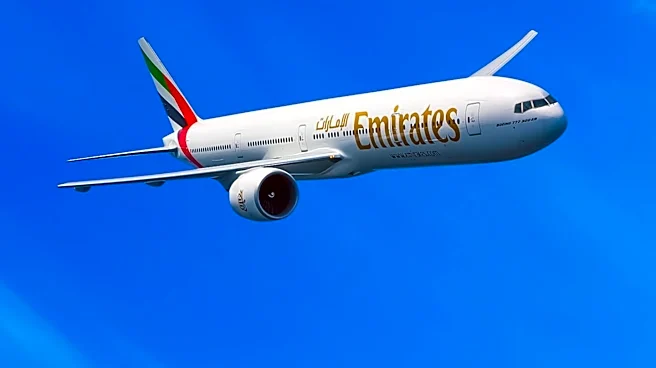
Emirates Airlines operates one of the longest commercial flights in the world, connecting Dubai, United Arab Emirates, to Auckland, New Zealand. This route, which began in 2016, spans 8,834 miles and takes just over 17 hours to complete. The flight is conducted
on a double-decker Airbus A380-800, having initially used a Boeing 777-200LR. The journey begins over the Arabian Sea, continues over the southern tip of India, crosses the Indian Ocean, and traverses the entire continent of Australia before reaching New Zealand. This route was once the longest commercial flight globally when it was launched, highlighting Emirates Airlines' role in pioneering ultra-long-haul air travel from the Gulf states.
Why It's Important?
The Dubai to Auckland route underscores the growing demand and capability for ultra-long-haul flights, which have become increasingly common in the airline industry. These flights eliminate the need for layovers, offering convenience and time savings for passengers traveling long distances. The ability to operate such extensive routes reflects advancements in aircraft technology, particularly in fuel efficiency and capacity. For Emirates Airlines, maintaining this route enhances its competitive edge in the global aviation market, catering to travelers seeking direct connections between distant locations. This trend also indicates a shift in consumer preferences towards more direct and efficient travel options, potentially influencing future airline route planning and aircraft design.
What's Next?
As the airline industry continues to innovate, more ultra-long-haul routes are likely to emerge, driven by advancements in aircraft technology and changing passenger demands. Airlines may explore new markets and destinations, expanding their networks to include more direct long-distance flights. For Emirates Airlines, maintaining and potentially expanding its ultra-long-haul offerings could solidify its position as a leader in global air travel. Additionally, the success of such routes may prompt other airlines to invest in similar capabilities, fostering competition and potentially leading to more options and better services for passengers.