




What's Happening?
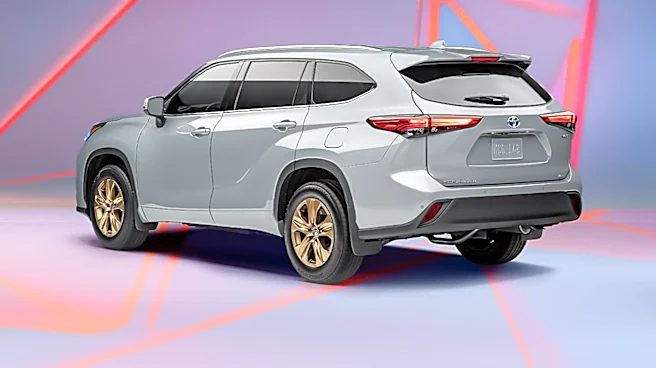
Toyota's joint venture in China, GAC Toyota, is set to unveil its first range-extended electric vehicle (EREV) on November 27, 2026, at the Guangzhou Motor Show. While the official name has not been confirmed, the teaser image and timing suggest it will
be an SUV likely based on the Highlander. This EREV will represent Toyota's fifth type of electrified vehicle, complementing its existing battery-electric, plug-in hybrid, regular hybrid, and fuel-cell models. An EREV operates solely on electric motors, with a small gasoline engine acting as a generator to charge the battery, rather than directly powering the wheels. This differs from the fully electric Highlander model planned for the U.S. market, which will be built in Georgetown, Kentucky, for the 2027 model year and will rely solely on plug-in charging.
Why It's Important?
Toyota's introduction of an EREV in China signifies a strategic response to the intense price wars and market fixation on battery-electric vehicles (BEVs) in the region. By utilizing a smaller, cheaper battery pack, EREVs can offer a more cost-effective solution, potentially sidestepping some of the competitive pressures faced by BEVs. This move could allow Toyota to capture a significant share of the Chinese market, with reported targets of building 200,000 EREVs in 2027 and 400,000 in 2028. The distinction between the China-bound EREV and the U.S.-bound BEV Highlander highlights how global automakers tailor their electrification strategies to meet diverse market demands, regulatory environments, and consumer preferences. This approach allows Toyota to maintain competitiveness in different regions while advancing its overall electrification goals.
What's Next?
The official reveal at the Guangzhou Motor Show on November 27, 2026, will provide more details on the vehicle's name, specifications, and pricing. The success of this EREV in China will be closely watched as it could influence Toyota's future electrification strategies in other markets, particularly those facing similar economic and competitive pressures. For the U.S. market, the focus remains on the fully electric Highlander, which will offer different battery capacities and estimated ranges. The parallel development of distinct electrified Highlander models for different regions underscores the complexity of global automotive manufacturing and the need for localized product offerings to meet specific market needs and regulatory frameworks.
Beyond the Headlines
Toyota's embrace of EREV technology for the Chinese market reveals a nuanced approach to the global transition to electric vehicles. While many automakers are heavily investing in pure BEVs, Toyota's strategy acknowledges that a single solution may not fit all markets. EREVs can serve as a bridge technology, offering the benefits of electric driving with the extended range assurance of a gasoline generator, which might appeal to consumers in regions with less developed charging infrastructure or range anxiety. This diversified electrification strategy could provide Toyota with greater flexibility and resilience in a rapidly changing automotive landscape, allowing it to adapt to varying market conditions and consumer demands more effectively than competitors solely focused on BEVs. It also highlights the ongoing debate within the industry about the most effective pathways to decarbonization.