






What's Happening?
General Motors and Lucid Group are presenting investors with distinct opportunities in the automotive sector as they vie for market dominance in 2026. General Motors, a legacy automaker, is leveraging its extensive manufacturing capabilities and historical
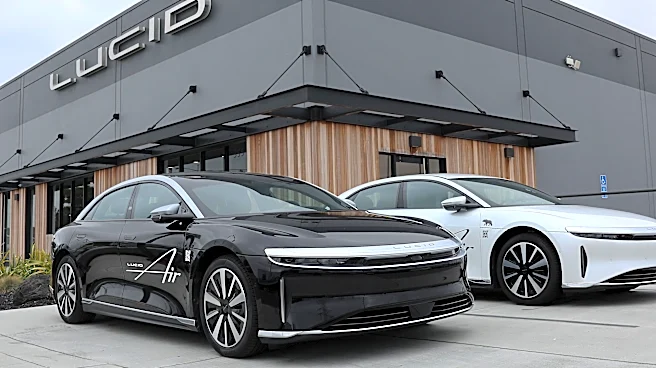
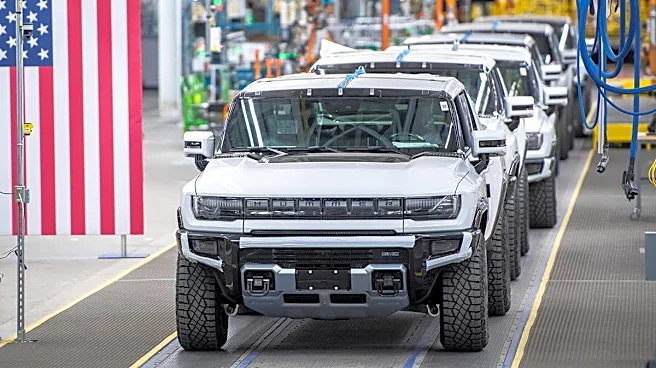
market presence to transition towards software-defined vehicles. The company reported a revenue of nearly $185 billion in FY 2025, with a net income of approximately $2.7 billion, despite a slight decrease in revenue compared to the previous year. Lucid Group, on the other hand, is focusing on the luxury electric vehicle market, backed by a significant purchase agreement from the Saudi Arabian government. In FY 2025, Lucid generated nearly $1.4 billion in revenue, reflecting a growth rate of approximately 67.6%, but reported a net loss of close to $2.7 billion. Both companies face unique challenges and opportunities as they navigate the evolving automotive landscape.
Why It's Important?
The competition between General Motors and Lucid Group highlights the broader shifts occurring in the automotive industry, particularly the transition towards electric vehicles and software integration. General Motors' strategy to leverage its manufacturing scale and partnerships, such as the Ultium Cells joint venture, positions it as a stable investment with a focus on long-term profitability. Lucid's emphasis on luxury electric vehicles and its partnership with Saudi Arabia underscores the growing demand for high-end EVs, though it also introduces risks related to customer concentration and financial sustainability. The outcome of this competition could influence investment strategies and shape the future of automotive innovation, impacting stakeholders across the industry.
What's Next?
As both companies continue to develop their strategies, investors and industry observers will be watching for key developments, such as General Motors' progress in software-defined vehicles and Lucid's ability to scale production and achieve profitability. Regulatory changes, technological advancements, and consumer preferences will also play critical roles in determining the success of each company's approach. The automotive sector's evolution towards electric and autonomous vehicles will likely drive further competition and collaboration among industry players.