








What's Happening?
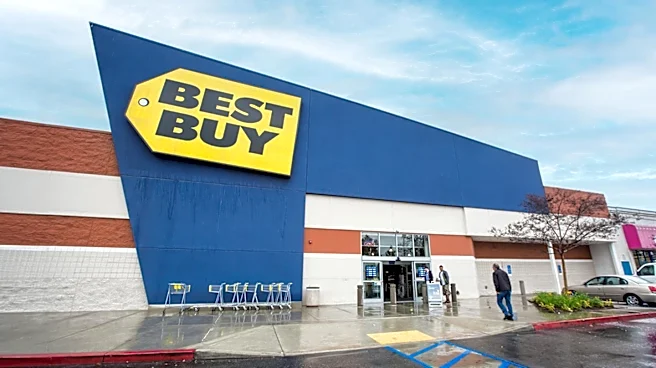
Best Buy is implementing new sustainability initiatives by piloting battery-powered yard vehicles at two of its distribution centers in California. This move aims to reduce emissions and operational costs associated with its logistics. Concurrently, the
company has installed a solar field at its distribution center in Dinuba, California. This solar installation is projected to generate nearly 6 million kilowatt-hours of electricity annually, further contributing to Best Buy's environmental goals. These efforts are part of a broader strategy to enhance energy efficiency and reduce the company's carbon footprint. Best Buy is also actively hiring Retail Sales Associates for its stores, indicating ongoing operational needs alongside its environmental commitments. The company's Brooklyn, NY location at 625 Atlantic Ave, Ste A7, operates from 10:00 am to 9:00 pm on weekdays.
Why It's Important?
These initiatives by Best Buy are significant for several reasons. The adoption of battery-powered yard vehicles demonstrates a commitment to reducing greenhouse gas emissions within the logistics sector, a major contributor to environmental pollution. By lowering operational costs through energy efficiency, Best Buy could set a precedent for other large retailers to invest in similar sustainable technologies, potentially driving broader industry change. The substantial solar field installation in Dinuba highlights a shift towards renewable energy sources, reducing reliance on fossil fuels and promoting energy independence. This move not only benefits the environment but also offers long-term financial advantages through reduced energy expenses. For consumers, these actions may enhance Best Buy's brand image as an environmentally conscious company, potentially influencing purchasing decisions. The ongoing hiring for Retail Sales Associates indicates a stable or growing retail presence, suggesting that these environmental investments are being made within a healthy business operational framework.
What's Next?
Best Buy's pilot program for battery-powered yard vehicles will likely be evaluated for its effectiveness in reducing emissions and operational costs. If successful, the company may expand this initiative to more distribution centers across the country, further integrating sustainable practices into its supply chain. The performance of the solar field in Dinuba will be monitored to ensure it meets its projected energy generation targets, potentially leading to similar solar installations at other suitable locations. These environmental efforts could also influence Best Buy's corporate social responsibility reporting and marketing strategies, highlighting its commitment to sustainability. Furthermore, the continued hiring of Retail Sales Associates suggests an ongoing focus on customer service and in-store experience, indicating that Best Buy will likely continue to balance its environmental goals with its core retail operations. Future developments may include further investments in green technologies and partnerships aimed at achieving broader sustainability targets.
Beyond the Headlines
Beyond the immediate environmental and economic benefits, Best Buy's actions reflect a growing trend among major corporations to integrate sustainability into their core business models. This shift is driven not only by regulatory pressures and consumer demand but also by a recognition of the long-term financial and reputational advantages of eco-friendly practices. The investment in renewable energy and electric vehicles can serve as a hedge against volatile energy prices and contribute to a more resilient supply chain. Ethically, these initiatives align with corporate responsibility to mitigate climate change and promote a healthier planet. Culturally, such moves can influence public perception, encouraging other businesses and individuals to adopt more sustainable behaviors. This broader impact extends beyond Best Buy's direct operations, contributing to a larger societal movement towards environmental stewardship and sustainable development within the U.S. business landscape.