




What's Happening?
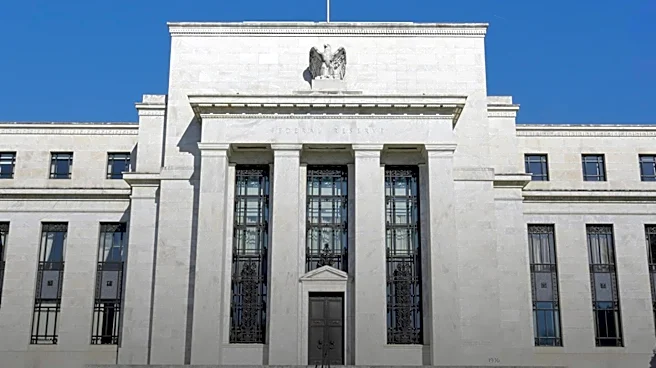
Federal Reserve Chair Kevin Warsh and the Federal Open Market Committee (FOMC) are facing a complex challenge in managing persistently elevated inflation, which President Trump has publicly downplayed, stating it is 'solved.' However, economists and various
economic data points strongly disagree. According to The Motley Fool, two primary factors are contributing to this inflation: President Trump's tariff and trade policies, which have directly increased goods prices, and the Iran war, which has disrupted global oil supplies and subsequently raised energy and petroleum-based product costs. Additionally, the significant build-out of AI infrastructure, while not directly related to President Trump's policies, is also fanning inflationary pressures. The demand for AI hardware, coupled with supply shortages, has given AI companies unprecedented pricing power, leading to higher costs for components like CPUs, memory, and storage solutions, thereby reversing a nearly two-decade downtrend in computer and electronic prices.
Why It's Important?
The ongoing inflationary pressures pose a significant dilemma for the U.S. economy and financial markets. The Federal Reserve's traditional approach to combating inflation involves raising interest rates, which increases borrowing costs. While this could help cool down prices, it risks undermining the partially debt-financed AI data center build-out, a key driver of current economic growth and stock market performance. The Motley Fool highlights that the AI revolution has transformed what was once a deflationary force into a significant source of U.S. inflation. If the Fed acts aggressively, it could stifle investment in AI, impacting technological advancement and economic expansion. Conversely, inaction could lead to further entrenchment of inflation, eroding consumer purchasing power and creating economic instability. This situation creates a precarious balance for policymakers, affecting businesses reliant on AI technology and consumers facing higher prices across various sectors.
What's Next?
The Federal Reserve, under Chair Kevin Warsh, is in a difficult position regarding its next steps. If inflation continues to be driven by both geopolitical factors and the AI boom, the FOMC will likely face increasing pressure to implement further monetary policy adjustments. The decision to raise interest rates or maintain the current stance will have significant repercussions for the U.S. economy. Higher interest rates could slow down the AI infrastructure development, potentially impacting the tech sector and broader economic growth. Conversely, if the Fed refrains from aggressive action, inflation could become more deeply embedded, leading to long-term economic challenges. Wall Street and consumers will be closely watching the Fed's upcoming decisions, as they will dictate the trajectory of borrowing costs, investment in key technologies, and overall economic stability.
Beyond the Headlines
The current inflationary environment, exacerbated by the AI infrastructure boom, reveals a deeper economic shift where technological advancements, traditionally associated with deflationary pressures, are now contributing to rising costs. This challenges conventional economic models and policy responses. The ethical and strategic implications of the AI build-out are also coming to the forefront; while AI promises significant productivity gains, its immediate impact on inflation, particularly through increased demand for specialized hardware, presents a complex trade-off. The reliance on debt financing for this infrastructure further complicates the Fed's ability to manage inflation without risking a broader economic slowdown. This situation underscores the interconnectedness of technological progress, geopolitical events, and monetary policy, suggesting a need for innovative approaches to economic management in an increasingly complex global landscape.