






What's Happening?
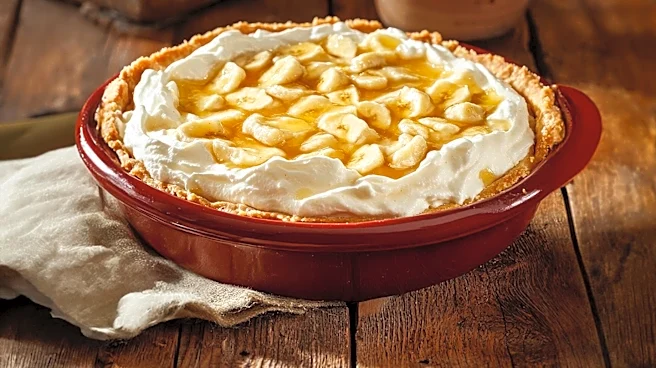
Food historian Susan Benjamin has uncovered that pie, a dessert now widely beloved in America, was once considered the nation's most-hated dessert. This surprising historical detail emerged from Benjamin's research into how the baked good was perceived
in Victorian-era Boston. The revelation challenges contemporary views of pie as a quintessential American treat, suggesting a significant shift in culinary tastes and perceptions over time. The research, highlighted by WBUR, delves into a 'spicy chapter' of pie's past, indicating that its journey to widespread acceptance was not straightforward. This historical context provides a unique perspective on the evolution of American food culture and the changing popularity of various dishes.
Why It's Important?
This historical insight is important as it sheds light on the dynamic nature of culinary preferences and the cultural evolution of food in the United States. It demonstrates that even deeply ingrained food traditions, like the American love for pie, have complex histories and were not always universally embraced. For food industries, this highlights the potential for shifts in consumer tastes and the importance of understanding historical context in product development and marketing. For cultural historians, it offers a fascinating case study of how a food item can transition from being disliked to becoming a national favorite, reflecting broader societal changes and influences on diet and cuisine. The revelation could also inspire new culinary explorations, perhaps even a revival of 'hated' historical recipes.
What's Next?
The findings by Susan Benjamin could spark further academic and public interest in the historical evolution of American cuisine. Researchers might delve deeper into the specific reasons behind pie's unpopularity in Victorian-era Boston, exploring factors such as ingredients, preparation methods, or cultural attitudes towards desserts at the time. Culinary institutions and food media might feature discussions or reinterpretations of historical pie recipes, offering a fresh perspective on this classic dish. This could lead to new culinary trends that blend historical insights with modern tastes, potentially influencing restaurant menus and home cooking practices. The discussion could also encourage a broader examination of other food items that have undergone significant shifts in public perception.
Beyond the Headlines
Beyond the immediate historical revelation, this story touches upon the broader theme of cultural memory and how our understanding of food traditions can be shaped by selective historical narratives. The idea that pie was once 'hated' challenges the romanticized view of American culinary heritage, prompting a more critical examination of how certain foods become iconic. It also underscores the role of food historians in unearthing lesser-known aspects of our past, enriching our understanding of societal values, economic conditions, and technological advancements that influenced eating habits. This historical perspective can foster a deeper appreciation for the journey of food items and the complex interplay of factors that determine their place in a nation's diet.