








What's Happening?
Independent dairy farmers across the U.S. are advocating for the passage of the 'Milk from Family Dairies Act,' a sweeping dairy reform bill introduced by Senator Peter Welch (D-Vt.) and co-sponsored by Senator Bernie Sanders (I-Vt.). The bill aims to stabilize
the dairy industry and slow consolidation, which independent farmers argue disproportionately impacts small-scale dairies. The National Family Farm Coalition (NFFC), along with 87 other organizations, sent a letter to Congress on October 23, calling for immediate action on the bill, which was referred to the Senate Agriculture Committee in June. They contend that milk prices paid to U.S. dairy farmers have been below production costs for decades, leading to widespread small-farm closures. The National Milk Producers Federation (NMPF), however, opposes the bill, expressing concerns that government-mandated supply management could limit farmers' growth, disadvantage those who have expanded, and raise consumer grocery costs.
Why It's Important?
The 'Milk from Family Dairies Act' addresses critical economic and social issues within the U.S. dairy industry. Its passage could significantly impact the livelihoods of thousands of independent dairy farmers who have struggled with low milk prices and market volatility. By proposing minimum milk prices based on herd size and production costs, and linking production to domestic demand, the bill aims to ensure fair compensation for farmers and prevent further consolidation into 'mega-dairies.' This could preserve rural economies, promote sustainable farming practices, and offer consumers a more resilient and affordable milk supply. Conversely, opponents argue that such a system could stifle innovation, create a quota-like system similar to Canada's, and ultimately lead to higher grocery prices for consumers. The debate highlights the tension between supporting small businesses and maintaining a competitive, efficient market.
What's Next?
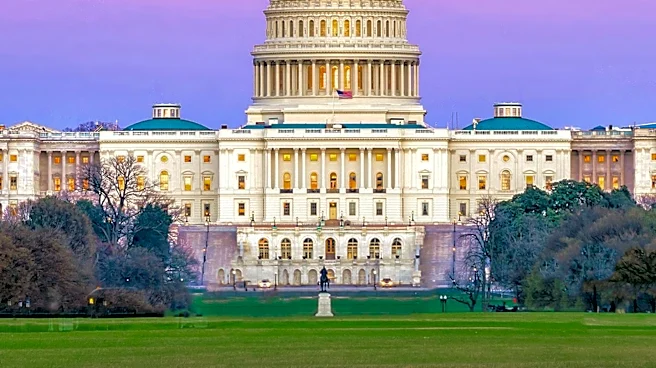
The 'Milk from Family Dairies Act' currently awaits a hearing in the Senate Agriculture Committee. Independent dairy farmers and their advocates will continue to lobby Congress for its advancement. If the bill moves forward, it will undergo committee review, potential amendments, and votes in both the Senate and the House of Representatives. The National Milk Producers Federation and other industry groups are expected to continue their opposition, advocating for alternative solutions that they believe better serve the long-term health of the dairy industry. The legislative process will involve extensive debate on the potential economic impacts, including effects on milk prices, consumer costs, and the structure of dairy farming. The outcome will determine whether the U.S. dairy industry shifts towards a more regulated, supply-managed system or continues under its current market-driven framework.
Beyond the Headlines
The 'Milk from Family Dairies Act' touches upon deeper societal values concerning the future of family farming and the structure of the U.S. food system. The decline of independent dairy farms represents a loss of traditional agricultural heritage and contributes to rural economic instability. The bill's focus on matching national dairy production to national demand reflects a broader movement towards food sovereignty and local food systems, challenging the export-focused model that has dominated in recent decades. The debate also raises ethical questions about corporate power in agriculture, with small farmers often feeling powerless against large processors. The proposed legislation could be seen as an attempt to reassert democratic control over food production and ensure that the benefits of agriculture are more equitably distributed. Its success or failure will have long-term implications for the landscape of American agriculture, consumer choices, and the economic viability of small-scale producers.