





What's Happening?
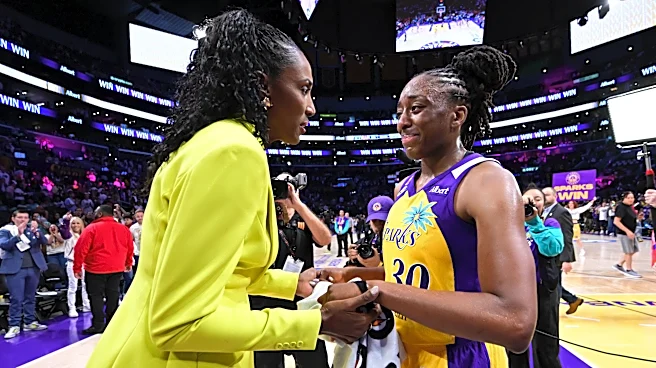
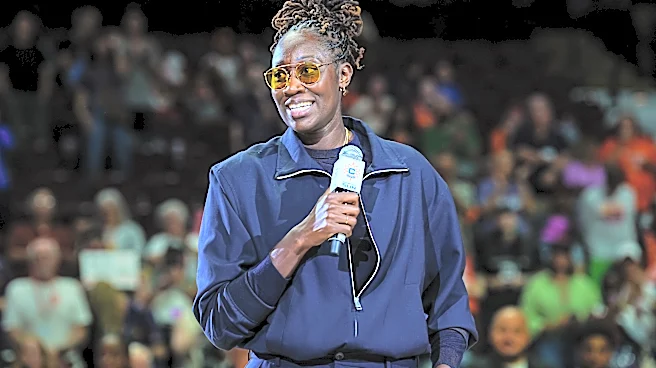
Nneka Ogwumike, current president of the Women's National Basketball Players Association (WNBPA) and a prominent figure in the WNBA, is being considered as a potential successor to Cathy Engelbert as the league's commissioner. Ogwumike, who plans to retire
from playing at the end of the 2026 season after a 15-year career, has expressed interest in executive leadership roles within the WNBA. She has been instrumental in negotiating collective bargaining agreements that significantly improved player pay and benefits. If appointed commissioner, Ogwumike's top priority would be to establish a pension plan for WNBA players, highlighting the disparity between the WNBA and NBA in this regard. She noted that while the WNBA has made strides, it still lags behind the NBA in providing meaningful long-term benefits like pensions.
Why It's Important?
Ogwumike's potential transition from player advocate to commissioner could mark a significant shift in the WNBA's leadership, bringing a player-centric perspective to the league's highest office. Her focus on establishing a pension plan addresses a critical aspect of player welfare and financial security, which has historically been a point of contention in women's professional sports. This move could set a new standard for player benefits in the WNBA, potentially attracting more talent and improving the overall professional landscape for athletes. Furthermore, her experience as WNBPA president demonstrates a proven ability to negotiate and implement changes that benefit players, suggesting a commissioner who would prioritize their long-term well-being and financial stability. The WNBA's growth and increasing visibility make this a crucial time for leadership that can balance business interests with player needs.
What's Next?
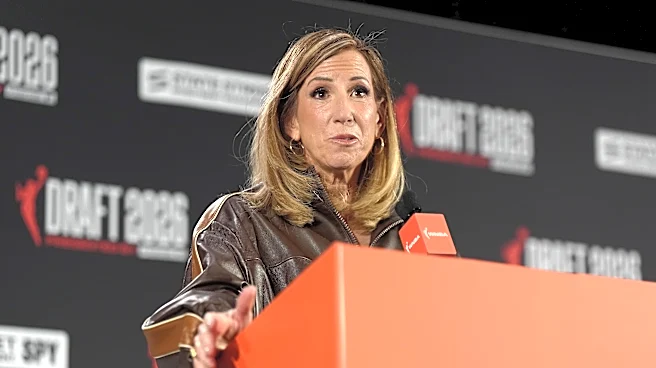
As speculation continues regarding Cathy Engelbert's successor, Nneka Ogwumike's name will likely remain prominent in discussions for the WNBA commissioner role. Her retirement from playing at the end of the 2026 season will free her to pursue executive leadership positions. Should she be appointed, the immediate focus would likely be on developing and implementing a comprehensive pension plan for WNBA players, a goal she has publicly stated as her top priority. This would involve negotiations with team owners and the league's board of governors. Her transition would also entail learning the business side of the league more extensively, though her experience as WNBPA president provides a strong foundation. The WNBA community, including players, fans, and stakeholders, will be closely watching these developments, anticipating potential changes in league policy and player support.
Beyond the Headlines
Ogwumike's potential leadership highlights a broader trend in professional sports where former athletes are increasingly stepping into executive roles, bringing firsthand experience and a deep understanding of player needs to decision-making processes. Her emphasis on pensions goes beyond immediate salary concerns, touching upon the long-term financial stability and post-career welfare of athletes, an area often overlooked in women's sports. This could inspire other leagues to re-evaluate their player benefit structures and push for more equitable compensation and retirement plans. Her advocacy also underscores the ongoing struggle for gender equity in professional sports, where women's leagues often operate with fewer resources and benefits compared to their male counterparts. Her potential commissionership could serve as a powerful symbol of progress and a catalyst for further advancements in player rights and financial security within the WNBA and beyond.