

What's Happening?
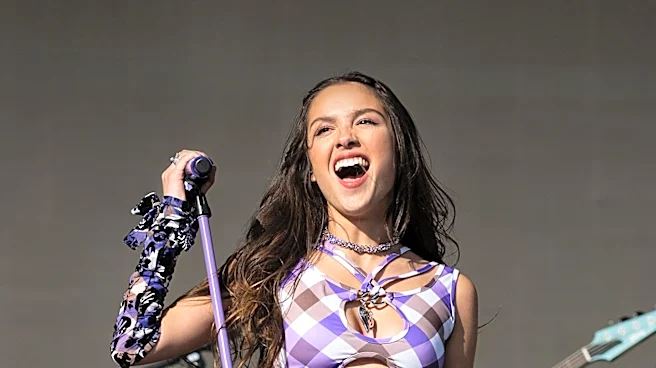
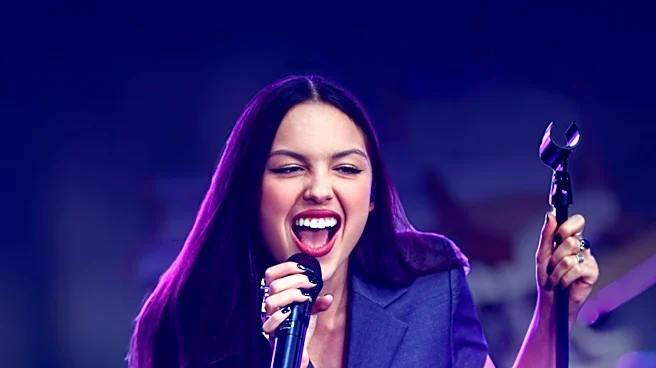
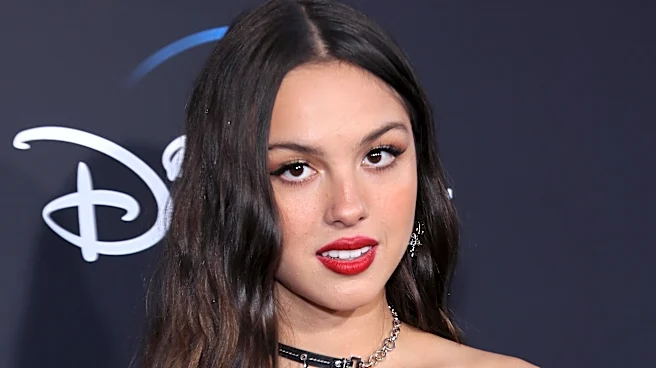
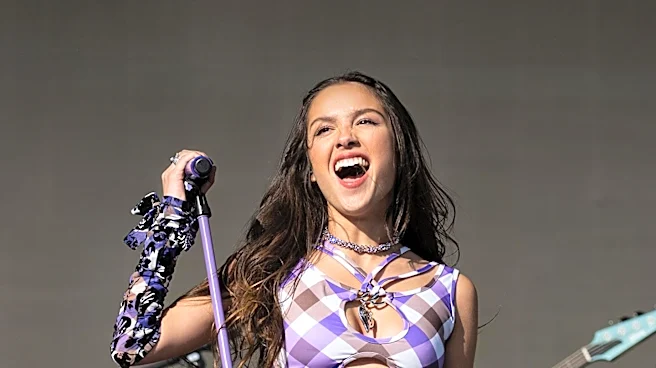
Olivia Rodrigo recently released her first Christmas song, 'take me home (4 christmas),' which has generated discussion due to perceived similarities to other holiday tracks. Specifically, some listeners noted resemblances to The Waitresses' 1981 song 'Christmas
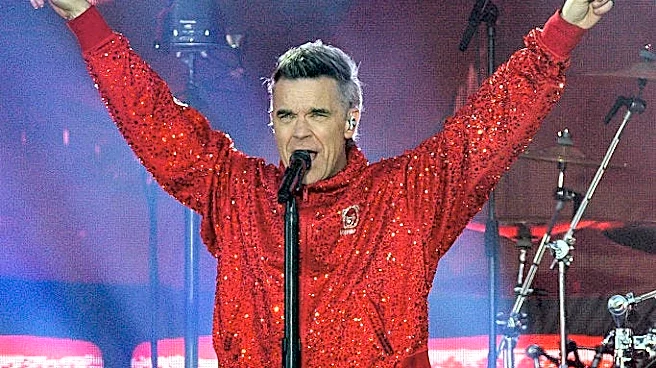
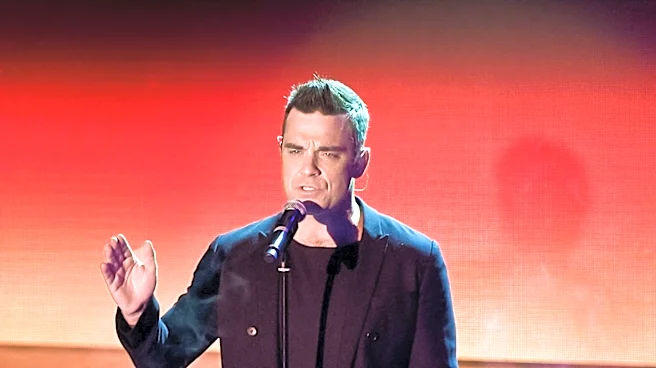
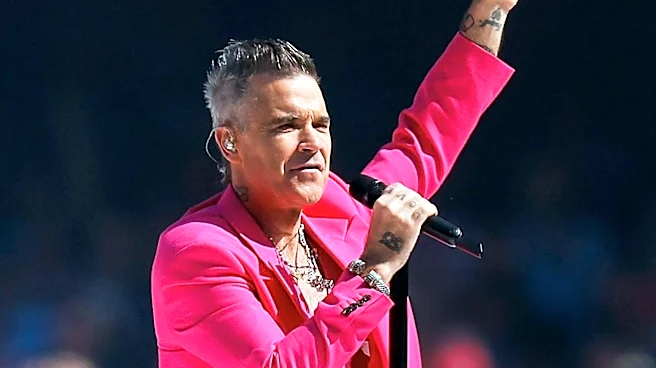
Wrapping.' Christopher Butler of The Waitresses defended Rodrigo, stating she had reached out to the band months before the song's release. More recently, comparisons have been drawn to Robbie Williams' 2012 song 'Candy.' Williams initially tweeted a Christmas greeting to Rodrigo, which some interpreted as a subtle jab. However, he later clarified in an Instagram post that he was not 'going after her,' expressing his admiration for Rodrigo's music and criticizing the trend of quick copyright accusations in the music industry. He also jokingly commented on Rodrigo's frequent use of profanity on stage.
Why It's Important?
This situation highlights the ongoing challenges and complexities within the music industry regarding copyright and originality. The ease with which accusations of plagiarism can arise, particularly in the digital age, can create a climate of fear for artists and potentially stifle creativity. While genuine theft of intellectual property is a serious concern that artists deserve protection from, the incident with Olivia Rodrigo and Robbie Williams underscores the fine line between inspiration, accidental similarity, and outright infringement. It also brings to light the public's role in interpreting musical resemblances and the potential for misinterpretation of artists' intentions, as seen with Williams' initial tweet. The debate over 'musical echoes' versus 'genuine theft' impacts how new music is created, consumed, and legally protected.
What's Next?
While Robbie Williams has publicly stated he has no issue with Olivia Rodrigo's song, the broader conversation around musical similarities and copyright in the industry is likely to continue. This incident may prompt further discussion among artists, legal experts, and music platforms about clearer guidelines or more nuanced approaches to intellectual property claims. For Olivia Rodrigo, the focus will likely shift back to her music and upcoming performances, including her scheduled appearance at Glastonbury Festival in 2025 and her Unraveled Tour. The public and media will continue to scrutinize new releases for any perceived resemblances, maintaining pressure on artists to navigate this complex landscape carefully.
Beyond the Headlines
The recurring theme of musical similarity sparking copyright debates points to a deeper issue within the creative arts: the finite nature of musical elements and the vast history of music. As Robbie Williams noted, there are only so many notes, chords, and ways to combine them, making accidental overlaps almost inevitable. This raises philosophical questions about originality in an era where nearly all musical combinations have likely been explored. The 'ambulance chasing' mentality Williams described, where every vague similarity is treated as a potential lawsuit, could lead to a chilling effect on artistic expression, discouraging artists from drawing inspiration from the rich tapestry of musical history. It also underscores the power of social media to amplify such discussions, sometimes without full context or understanding of the creative process.