




What's Happening?
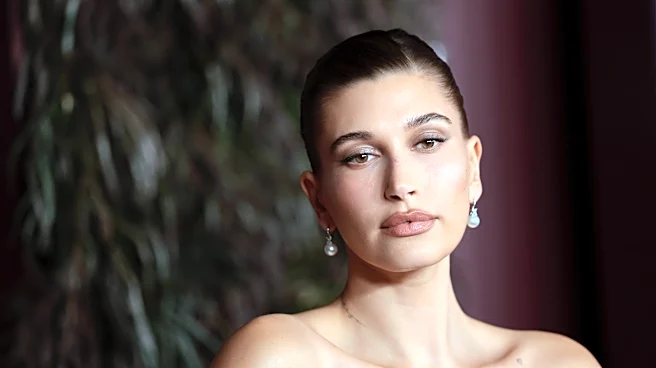
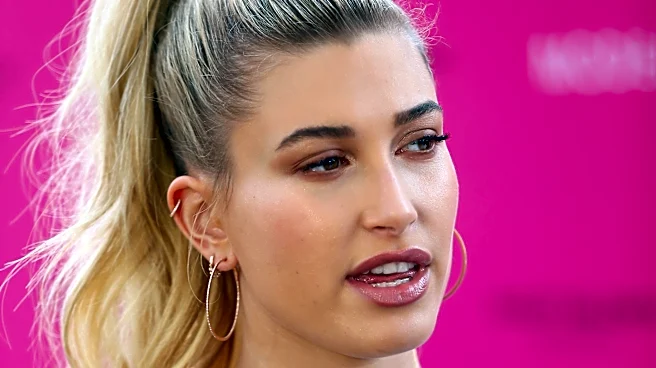
Hailey Bieber, founder of the skincare company Rhode, has drawn criticism for her use of the term 'optimistical delusion' during an interview at the New York Times' DealBook Summit. When asked about her initial valuation of Rhode at $1 billion, Bieber stated,
'You have to have a certain sense of optimistical delusion I think.' This comment quickly went viral, leading to accusations of using a 'nonsense' word and questioning her business acumen. Bieber later clarified her statement by sharing the dictionary definition of 'optimistical,' noting it is a variation of 'optimistic,' implying her comment reflected a strong belief in her brand's potential despite perceived odds. The interview, led by financial columnist Andrew Ross Sorkin, focused on Bieber's insights into culture and influence, particularly concerning her brand's success.
Why It's Important?
This incident highlights the intense scrutiny public figures, particularly those in business and entertainment, face regarding their public statements. For entrepreneurs like Bieber, whose brand is closely tied to their personal image, such comments can significantly impact public perception and brand credibility. The backlash underscores a broader societal expectation for business leaders to articulate their strategies with precision and tangible data, rather than relying on abstract or unconventional language. This event could influence how other celebrity entrepreneurs approach public speaking, potentially leading to more cautious and meticulously prepared responses to avoid similar controversies. It also reflects the ongoing debate about the substance behind celebrity-led businesses and the perceived ease of their success.
What's Next?
Following the clarification, the immediate impact on Rhode's business operations or sales is unlikely to be substantial, given Bieber's established brand and the company's reported high repeat-purchase rates. However, the incident may prompt Bieber and her team to refine her public communication strategy, especially in business-focused forums. Future appearances might see her providing more detailed and conventional explanations of her business strategies to preempt further criticism. The event also serves as a case study for media training professionals on how to prepare high-profile individuals for challenging interviews, particularly when discussing financial and strategic aspects of their ventures.
Beyond the Headlines
The 'optimistical delusion' controversy touches upon deeper themes of authenticity, public expectation, and the intersection of celebrity and entrepreneurship. Some interpretations suggest Bieber's comment, while unconventional, might have been an attempt to convey a less corporate, more personal drive behind her success, which resonates with a different segment of her audience. This incident also reflects the double standards often applied to women in business, where their language and approach are frequently scrutinized more harshly than their male counterparts. The debate over her word choice versus the underlying sentiment reveals a tension between traditional business discourse and the evolving, often more informal, communication styles prevalent in modern entrepreneurship and social media.