







What's Happening?
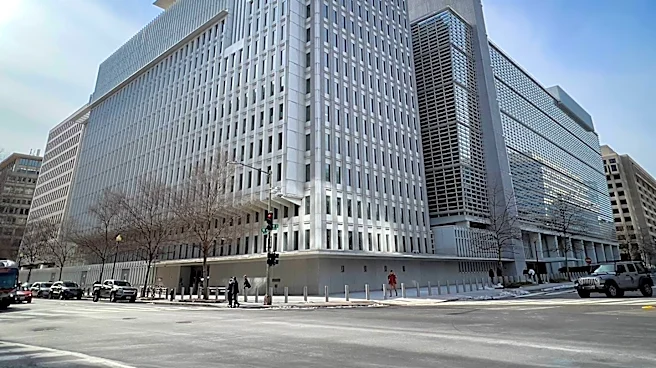
The World Bank Group is actively leading efforts to mobilize private capital in Nigeria, aiming to unlock up to $5.79 billion in private financing during fiscal year 2026. This initiative focuses on critical sectors including digital infrastructure, agriculture,
and finance for small and medium-sized enterprises (MSMEs). The strategy involves policy reforms to improve the investment environment, the creation of viable investment projects and platforms, and the use of financial instruments like direct financing, partnerships with other lenders, and capital-markets instruments to attract private investors. For instance, the Fostering Inclusive Finance for MSMEs in Nigeria program (FINCLUDE) is expected to mobilize nearly $1.89 billion in private financing, targeting over 250,000 MSMEs with 30% of funds allocated to women-led businesses. Additionally, IFC financing for Dangote Industries Limited and Indorama Fertilizer is helping expand domestic fertilizer production, mobilizing $1.02 billion and $282.5 million respectively, to improve access to inputs for over 10 million smallholder farmers.
Why It's Important?
The mobilization of $5.79 billion in private financing by the World Bank Group for Nigeria is crucial for the country's economic development and stability. This significant investment aims to address key infrastructure and financing gaps, fostering a more resilient, productive, and private sector-led Nigerian economy. For U.S. businesses, this initiative could open new avenues for investment and partnership in Nigeria's growing digital infrastructure and agricultural sectors. Increased stability and economic growth in Nigeria, a major African economy, can also contribute to regional stability, which is in the broader U.S. strategic interest. The focus on MSMEs and women-led businesses promotes inclusive growth, potentially reducing poverty and creating a larger consumer base. The World Bank Group's approach demonstrates how scarce public resources can be leveraged to de-risk investments and attract larger pools of private capital, setting a precedent for similar development models in other emerging markets.
What's Next?
The World Bank Group's initiative is expected to continue translating improved conditions into concrete opportunities for private capital. The ongoing reforms and investment platforms will aim to expand affordable broadband, strengthen agricultural value chains, and enhance access to finance for small businesses, creating more opportunities for women and young people. The success of these projects will be measured not only by the capital mobilized but also by their tangible impact on communities, such as farmers reaching stronger markets and businesses gaining room to grow. Future efforts will likely involve continued collaboration between the World Bank Group, the Nigerian government, and private sector entities to sustain momentum and scale up successful interventions. The model of using public resources to catalyze private investment will be closely watched as a potential blueprint for development in other regions.
Beyond the Headlines
This initiative goes beyond mere financial transactions; it represents a strategic shift towards leveraging private capital as a primary driver for sustainable development in emerging economies. By reducing investment risks and strengthening the enabling environment, the World Bank Group is fostering a market-driven approach to development that can achieve greater scale and impact than traditional aid models alone. The focus on digital transformation and agricultural value chains addresses fundamental needs for economic modernization and food security, which are critical for long-term stability. Furthermore, the emphasis on inclusive finance for MSMEs and women-led businesses highlights a commitment to equitable growth, recognizing that broad-based participation is essential for sustainable development. This approach could lead to a paradigm shift in how international development is funded and executed, with a greater reliance on market mechanisms and private sector engagement to achieve global development goals.