





What's Happening?
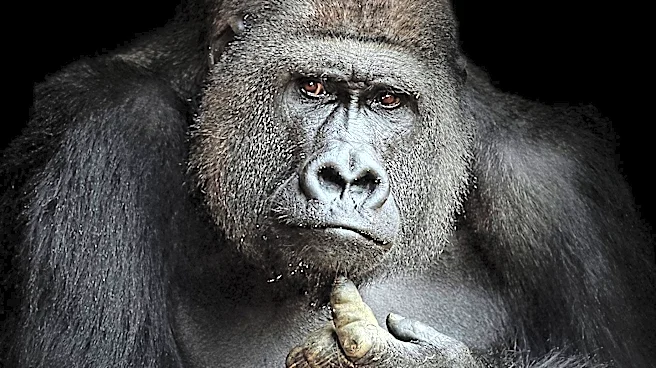
Janos Prohaska, an actor renowned for his portrayals of various animals in full-body suits, is being remembered for his extensive career in the 1960s and 1970s. Most famously, Prohaska appeared as the gorilla on 'Gilligan's Island,' a role he played five
times. His career, however, extended far beyond this, encompassing numerous appearances as apes, bears, and other creatures on shows like 'The Munsters,' 'Perry Mason,' 'The Andy Williams Show' (as Cookie Bear), and 'Bewitched' (as a bear, gorilla, and dodo bird). He also played the Giant Cuckoo-Wuckoo Bird in 'It's About Time' and created his own creature for 'Star Trek's' 'The Devil in the Dark.' Prohaska, a Hungarian stuntman, earned nearly 40 acting credits without ever revealing his face due to his heavy accent, which prevented him from landing speaking roles.
Why It's Important?
Janos Prohaska's career highlights a unique and often overlooked aspect of television production in the mid-20th century: the specialized craft of creature performance. His ability to embody a wide range of animals and fantastical beings, despite never showing his face or speaking on screen, demonstrates a significant contribution to the visual storytelling of the era. His work on iconic shows like 'Gilligan's Island' and 'Star Trek' helped define memorable characters and moments that continue to resonate with audiences. Prohaska's story also sheds light on the challenges faced by actors with accents in Hollywood during that period, illustrating how talent could find expression through non-verbal roles. His dedication to his craft, even creating his own creatures, underscores the innovative spirit present in early television production and the diverse skills required behind the scenes.
What's Next?
While Janos Prohaska's career tragically ended in an airplane crash, his legacy continues through the enduring popularity of the shows he contributed to. His performances remain accessible through reruns, streaming services, and archival footage of classic television. Discussions about his unique contributions serve to educate new generations about the history of special effects and character acting before the advent of advanced CGI. His story may also inspire future performers in creature suits or motion capture, demonstrating the impact that non-verbal, physical acting can have. Furthermore, his work could be featured in documentaries or retrospectives on classic television, providing deeper insights into the production methods and unsung heroes of that era.
Beyond the Headlines
Janos Prohaska's career offers a fascinating glimpse into the evolution of character design and performance in television. In an era predating sophisticated computer-generated imagery, actors like Prohaska were essential in bringing fantastical creatures to life through physical embodiment and elaborate costuming. His ability to convey emotion and character through movement alone speaks to the power of non-verbal communication in storytelling. The fact that he was known as 'The Great Janos' despite his anonymity underscores a broader theme in entertainment: the often-unseen contributions of specialized artists who shape the audience's experience. His story also subtly touches on the immigrant experience in Hollywood, where talent found unconventional avenues for expression when traditional paths were limited by factors like accent. This highlights the ingenuity and adaptability required to succeed in the entertainment industry.