






What's Happening?
The Ethereum network's core security mechanisms, including its underlying math, validator framework, and open ledger, have demonstrated resilience during recent market turbulence and cyberattacks in early November 2026. While Ether's price experienced
significant fluctuations, dropping to $1,800 on November 16 from a high of $2,118.49 on November 9, the network's fundamental security protocols remained intact. The primary vulnerabilities exploited by attackers were found in external elements such as laptops, signing devices, and wallet interfaces, rather than the Ethereum protocol itself. For example, a $6.34 billion theft from Binance on October 29, 2026, was attributed to hackers compromising an internal wallet signing service and exploiting an Ethereum feature (EIP-7702) to delegate wallet rules to a smart contract, not a flaw in Ethereum's core. Similarly, a reported $6.45 million loss from a Safe wallet on Monday was linked to a likely compromised key and the wallet's permissions settings, rather than a vulnerability in Zodiac's contracts. The network's proof-of-stake consensus mechanism, which includes 'slashing' penalties for validators who break rules, acts as a strong deterrent against direct attacks. Furthermore, Ethereum's use of multiple independent software clients (like Lighthouse, Reth, Nethermind) enhances its security by preventing a single bug from compromising the entire network, as demonstrated by the rapid patching of a Reth client bug on November 4.
Why It's Important?
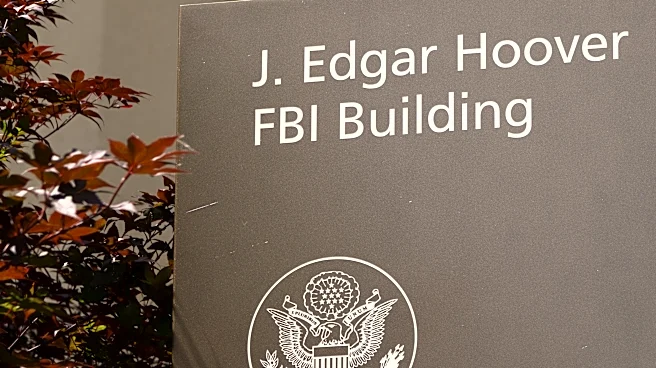
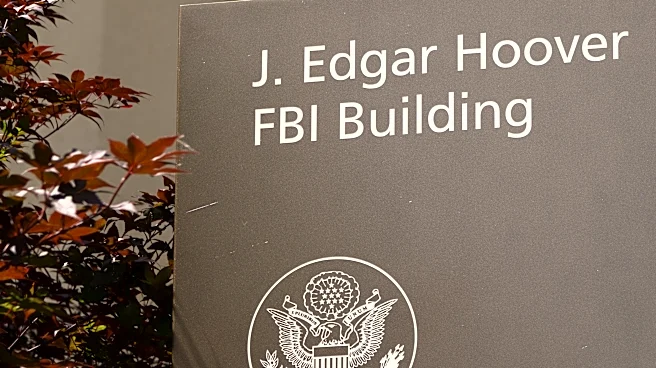
The distinction between the robust security of the Ethereum network and the vulnerabilities found in external user-facing applications and exchanges is crucial for understanding the overall risk landscape of cryptocurrency. This highlights that while the blockchain itself is highly secure against direct attacks, the points of interaction for users—such as digital wallets, exchanges, and personal devices—remain susceptible to sophisticated cyber threats. The FBI's 2025 Internet Crime Report, which noted crypto fraud losses at an all-time high of $11.366 billion, underscores the significant financial impact of these external vulnerabilities. For U.S. investors and businesses engaging with Ethereum, this means that security efforts must extend beyond trusting the core protocol to include stringent measures for personal device security, secure wallet management, and careful selection of reputable exchanges and service providers. The ongoing efforts to prepare Ethereum for quantum computing, with a potential acceleration of post-quantum encryption standards rollout to 2027, also demonstrate a proactive approach to future-proofing the network against emerging threats, which is vital for long-term confidence and adoption.
What's Next?
The cryptocurrency ecosystem will likely see continued emphasis on enhancing security measures for user-facing applications and exchanges. This includes improved wallet security, more robust authentication protocols, and increased user education on phishing and malware prevention. Law enforcement agencies, such as the FBI, Secret Service, and IRS-CI, will continue their efforts to track and recover stolen funds, as evidenced by their alert on the Binance theft. For developers and service providers, the focus will be on implementing best practices in cybersecurity, such as regular security audits and rapid patching of vulnerabilities, especially in critical components like wallet signing services. The ongoing development and implementation of post-quantum cryptography for Ethereum are expected to progress, with discussions around accelerating the timeline to 2027. This will involve significant research and development to integrate quantum-resistant algorithms, ensuring the network's security against future computational advancements. The industry will also need to address the challenge of 'address poisoning' bots, which attempt to trick users into sending funds to look-alike addresses, by developing more intuitive and secure transaction verification processes.
Beyond the Headlines
The persistent targeting of user-level vulnerabilities, despite the inherent strength of the Ethereum protocol, reveals a fundamental tension in the digital asset space: the human element remains the weakest link. This has profound implications for the broader adoption of cryptocurrencies, as mainstream users may be deterred by the perceived risk of losing funds due to external attacks. The incidents underscore the need for a holistic security approach that integrates technological safeguards with robust user education and industry-wide best practices. Furthermore, the use of Ethereum transactions to host malware command-and-control (C2) server addresses, as seen in the 'HuntRole' malware, highlights an emerging threat vector. This innovative use of a public, immutable ledger for malicious purposes presents a unique challenge for cybersecurity, as traditional methods of taking down C2 infrastructure (like domain seizures) are ineffective. This necessitates new strategies for threat intelligence and incident response, potentially involving collaboration between blockchain analytics firms, cybersecurity experts, and law enforcement to identify and mitigate such threats without compromising the decentralized nature of the blockchain.