






What's Happening?
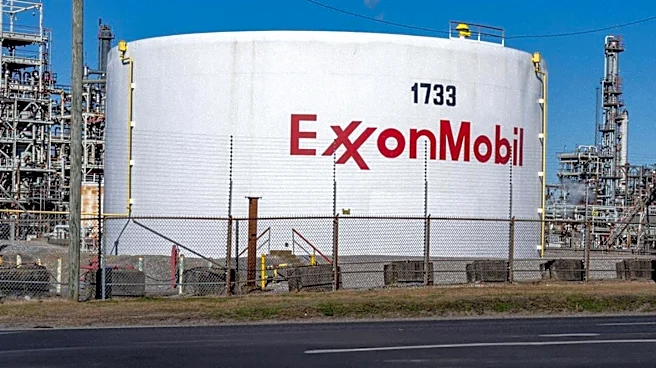
ExxonMobil, a major U.S. energy company, has announced the successful application of artificial intelligence (AI) to identify new drilling opportunities offshore Guyana. Darren Woods, ExxonMobil's chairman and chief executive, stated during the Q2 earnings
call that the company has invested significant effort into AI and training models. These models were developed using existing drilling data and subsurface characterization from their operations in the Stabroek Block offshore Guyana. This AI-driven analysis has led to the discovery of four new potential drilling opportunities, exceeding previous expectations. Woods expressed optimism about these findings, though he noted that further work is required to confirm them. This development highlights a growing trend among major oil and gas companies to integrate advanced AI technologies into their exploration efforts to enhance efficiency and discover new reserves. Chevron, another U.S. supermajor, also indicated its intention to use new AI tools in its exploration activities, emphasizing the technology's potential to accelerate cycle times and improve outcomes.
Why It's Important?
The integration of AI into oil and gas exploration by companies like ExxonMobil has significant implications for the U.S. energy industry and global energy markets. By using AI to identify new drilling opportunities, companies can potentially increase their reserves and production, which could impact global oil supply and pricing. This technological advancement could lead to more efficient and cost-effective exploration, reducing the financial risks associated with traditional methods. For the U.S. economy, increased domestic or U.S.-controlled international oil production could enhance energy security and potentially create jobs in the energy sector. However, it also raises questions about the long-term environmental impact of extending fossil fuel extraction. The ability of AI to unlock additional oil and gas resources could reinforce the incumbency of fossil fuels, potentially slowing the transition to renewable energy sources, as some studies suggest that AI-driven productivity gains in fossil fuels might outweigh emissions reductions from AI in renewables. This shift could benefit major oil companies by extending the viability of their core business models.
What's Next?
ExxonMobil plans to conduct further work to confirm the four new discovery opportunities identified by AI offshore Guyana. This will likely involve additional geological surveys, seismic testing, and potentially exploratory drilling to assess the commercial viability of these sites. The success of these AI-driven discoveries could prompt other major energy companies to accelerate their adoption of similar technologies, leading to a broader industry trend of AI integration in exploration and production. We can expect continued investment in AI research and development within the energy sector, focusing on refining models and expanding their application to other operational areas. The long-term implications will involve monitoring the balance between increased fossil fuel production facilitated by AI and global climate goals, potentially leading to policy discussions around technology's role in energy transition strategies.
Beyond the Headlines
The application of AI in oil and gas exploration extends beyond mere efficiency gains; it touches upon ethical and environmental considerations. While AI can optimize resource discovery and extraction, potentially lowering operational costs and increasing supply, it also raises concerns about its contribution to climate change. The enhanced ability to find and extract fossil fuels could prolong reliance on these energy sources, complicating efforts to meet global emissions targets. This development highlights a critical dilemma: how to leverage advanced technology for economic benefit while addressing its potential negative environmental consequences. Furthermore, the increasing sophistication of AI tools in subsurface analysis could lead to a re-evaluation of geological expertise, with human analysts working in conjunction with AI rather than being replaced by it. The long-term societal impact will depend on how governments and corporations balance the economic advantages of AI-driven fossil fuel production with the urgent need for sustainable energy solutions and climate action.