





What's Happening?
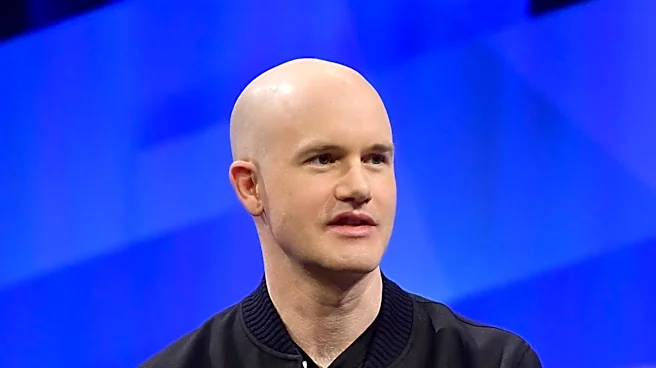
Coinbase CEO Brian Armstrong, Director Fred Ehrsam, and President Emilie Choi have adopted Rule 10b5-1 trading plans to potentially sell approximately 13.6 million Class A shares. Armstrong's plan alone covers up to 8.17 million shares, with sales anticipated
to commence between November 2026 and October 2027. Ehrsam's plan involves up to 3.87 million shares, while Choi's plan includes about 1.56 million identified shares, along with additional shares tied to future equity awards. These arrangements, adopted under Rule 10b5-1, allow company insiders to pre-schedule stock transactions under specific conditions, such as reaching predetermined share price thresholds. The exact number of shares ultimately sold will depend on whether these conditions are met, as the individual price thresholds have not been publicly disclosed. These plans were established during an open trading window and adhere to Coinbase's internal insider trading policies.
Why It's Important?
The filing of these Rule 10b5-1 plans by Coinbase's top executives is significant for several reasons. For investors, it provides transparency into the future potential stock sales by key company figures, which can influence market sentiment and stock valuation. While these are pre-scheduled plans designed to avoid accusations of insider trading, a large volume of potential sales could be interpreted by some as a signal regarding the executives' long-term outlook on the company's stock performance. The use of Rule 10b5-1 is crucial as it offers an affirmative defense against insider trading allegations by ensuring transactions are planned in advance, independent of any material non-public information. This move also highlights the financial planning strategies of high-level executives in the cryptocurrency exchange sector, a relatively new and volatile market. The sheer volume of shares involved, representing a substantial portion of Class A shares, could lead to increased liquidity in the market for Coinbase stock.
What's Next?
The potential sales under these Rule 10b5-1 plans are scheduled to begin in November 2026 for Brian Armstrong and Fred Ehrsam, and January 2027 for Emilie Choi, continuing through late 2027. The actual execution of these sales will be contingent on Coinbase's stock reaching the undisclosed price thresholds specified in each plan. Investors and market analysts will closely monitor Coinbase's stock performance leading up to and during these periods to gauge the impact of these potential sales. The company's future financial disclosures may offer more details on the progress of these plans and any adjustments made. Additionally, the cryptocurrency market's overall health and regulatory developments could influence Coinbase's stock price, thereby affecting whether the conditions for these sales are met. Coinbase has previously implemented similar trading plans for executives, indicating a recurring strategy for managing insider stock transactions.
Beyond the Headlines
The adoption of these Rule 10b5-1 plans by Coinbase executives underscores a broader trend in corporate governance within the tech and cryptocurrency sectors. It reflects a proactive approach by companies to manage potential conflicts of interest and maintain market integrity, especially given the heightened scrutiny on insider trading. The timing of these plans, set years in advance, suggests a long-term financial strategy rather than an immediate reaction to market conditions. This practice allows executives to diversify their personal portfolios while adhering to regulatory requirements. Furthermore, the transparency provided by these filings, even without disclosing specific price triggers, helps to build trust with investors by demonstrating a commitment to ethical trading practices. The cryptocurrency industry, in particular, benefits from such measures as it strives for greater legitimacy and stability in the broader financial landscape.