






What's Happening?
American Airlines Group Inc. (NASDAQ:AAL) is significantly increasing its focus on premium seating capacity, with plans to grow it by approximately 50% before the end of the decade. This strategic shift is driven by the fact that roughly 30% of its seats
currently generate half of its total revenue, indicating a strong demand and higher yield from premium travelers. The airline is implementing a 70-suite business-class cabin on its Boeing 777-300ER aircraft and reconfiguring its 787-8 and 777-200 fleets to offer more premium inventory. CEO Robert Isom has publicly stated this aggressive expansion goal. This move aims to capitalize on proven customer spending habits and enhance revenue per aircraft, potentially narrowing the profitability gap with competitors that have stronger premium offerings.
Why It's Important?
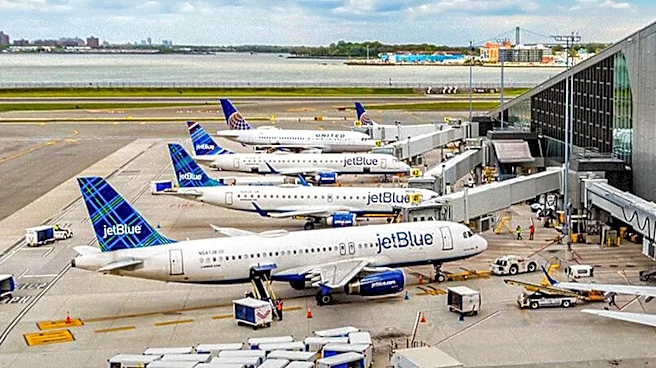
This strategic pivot by American Airlines has significant implications for the U.S. airline industry and its economic landscape. By concentrating on premium cabins, American Airlines is betting on the continued growth of high-end travel demand, which could lead to increased revenue and profitability. This approach allows the airline to improve its revenue mix without solely relying on passenger-volume growth, a crucial advantage when facing rising fuel and operating costs. However, this strategy also carries risks; a slowdown in premium demand, particularly from corporate and first-class travelers, could disproportionately impact American Airlines' top line. The increased competition in the premium segment, with other major carriers like Delta, United, and JetBlue also expanding their premium products, could lead to an oversupply, potentially reducing the fare premium that makes these cabin changes attractive.
What's Next?
American Airlines will proceed with the reconfiguration of its Boeing 777-300ER, 787-8, and 777-200 fleets to integrate more premium seating options, including the new 70-suite business-class cabin. The airline will closely monitor demand trends for premium travel and the competitive landscape as other carriers also expand their high-end offerings. Investors and industry analysts will be watching to see if the increased premium capacity translates into the anticipated revenue growth and improved profitability, especially in comparison to rivals. The success of this strategy will depend on sustained demand from higher-paying travelers and American Airlines' ability to maintain a competitive edge in a crowded premium market. The airline's financial performance in the coming years will be a key indicator of the effectiveness of this premium push.
Beyond the Headlines
The aggressive push into premium seating by American Airlines highlights a broader trend within the U.S. airline industry: the increasing segmentation of air travel and the prioritization of high-yield customers. This strategy reflects a shift away from a purely volume-driven model towards one that maximizes revenue per seat. While potentially beneficial for airline profitability, it could also exacerbate the perception of a two-tiered travel experience, where economy class passengers might see fewer amenities or less investment. This focus on premium services could also influence aircraft procurement and cabin design across the industry, leading to more luxurious and technologically advanced front-cabin products. The long-term implications include potential changes in passenger expectations, pricing structures, and the overall accessibility of air travel, as airlines increasingly cater to the most lucrative segments of the market.