


What's Happening?
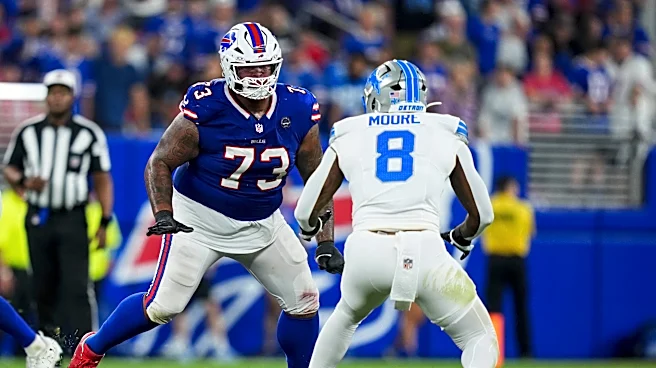
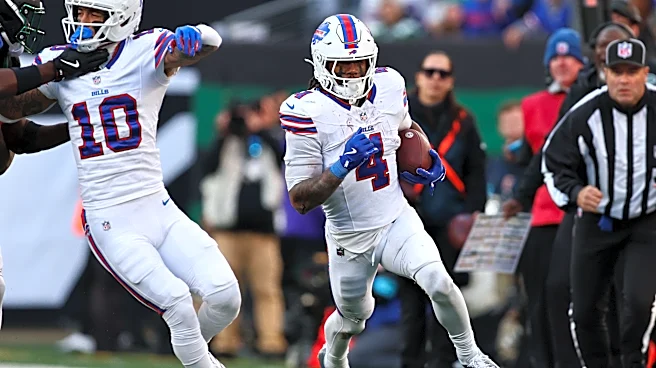
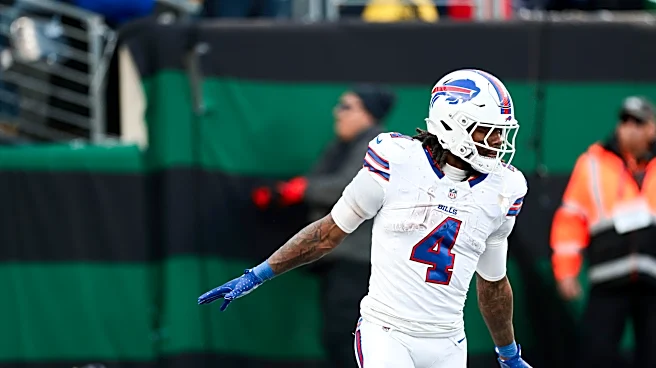
DJ Moore's performance with the Buffalo Bills has become a point of contention among fans and analysts, particularly regarding his contract value. Despite a recent strong showing where he caught four passes for 90 yards, including a 45-yard touchdown,
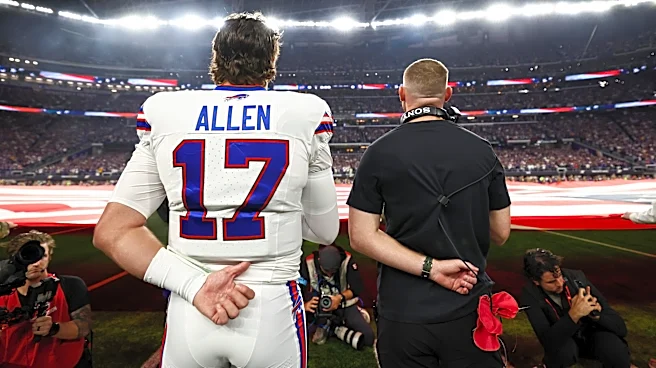
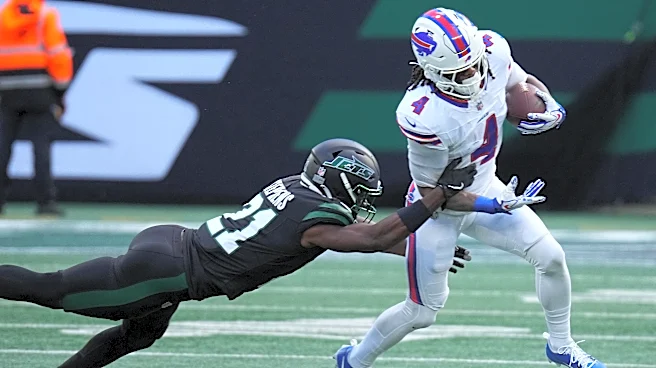
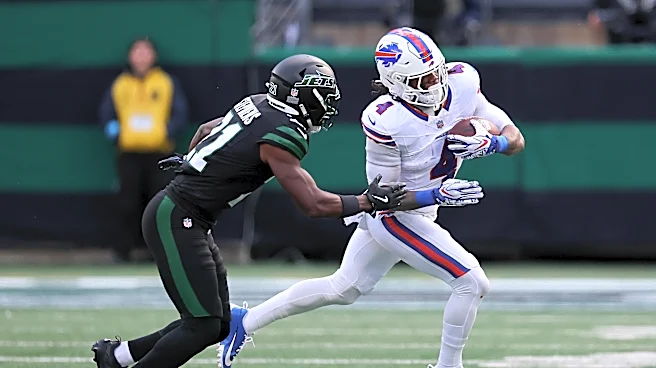
some Bills fans have questioned whether he is worth his current pay. A contract grading thread from a Bills account even listed Moore among the worst values on the roster. While his season totals show 23 catches for 375 yards and three touchdowns in seven games, averaging 16.3 yards per catch, his volume of targets has been lower than some expect. This situation is set against the backdrop of a Bills offense that heavily utilizes running back James Cook and quarterback Josh Allen's rushing abilities. The debate intensified after a game against the New York Jets where Moore's significant plays contributed to a Bills victory, yet the overall assessment of his season remains mixed.
Why It's Important?
The discussion surrounding DJ Moore's contract and on-field production is significant for the Buffalo Bills' strategic planning and salary cap management. If a high-salaried player is perceived as underperforming relative to their contract, it can impact future roster decisions, including potential trades or restructures. For the Bills, who are contending for a top spot, maximizing the value from every player, especially those with substantial contracts, is crucial for sustained success. The debate also highlights the evolving nature of offensive schemes in the NFL, where a receiver's value might be measured not just by volume but by efficiency and impact plays within a run-heavy or quarterback-scrambling offense. This situation could influence how other teams evaluate wide receiver contracts and roles in similar offensive systems, potentially shifting market values for certain player archetypes.
What's Next?
As the NFL season progresses, the focus will remain on DJ Moore's continued performance and his integration into the Bills' offensive strategy. Upcoming games, particularly against stronger opponents like the Dolphins and Chiefs, will provide further opportunities to assess his impact and consistency. The coaching staff, led by head coach Joe Brady, will likely continue to evaluate how to best utilize Moore's talents within their scheme, potentially adjusting play-calling to increase his target share or leverage his big-play ability more frequently. The ongoing debate among fans and media will also influence public perception and pressure on the team. Ultimately, Moore's performance in critical late-season games and potential playoff appearances will be key in determining whether the perception of his contract value shifts positively or negatively, impacting his long-term future with the team.
Beyond the Headlines
Beyond the immediate statistics and contract discussions, the situation with DJ Moore reflects broader trends in professional sports regarding player valuation and fan expectations. In an era of advanced analytics and detailed contract breakdowns, fans and media are increasingly scrutinizing player performance against their financial compensation. This can create pressure on athletes to consistently deliver at a high level, even when their role might be more specialized or less volume-driven within a team's overall strategy. The narrative around Moore also touches on the challenge of integrating high-profile acquisitions into established offensive systems, especially when those systems already feature dominant playmakers like Josh Allen. It underscores the complex interplay between individual talent, team dynamics, coaching philosophy, and financial investment in the high-stakes environment of the NFL.