





What's Happening?
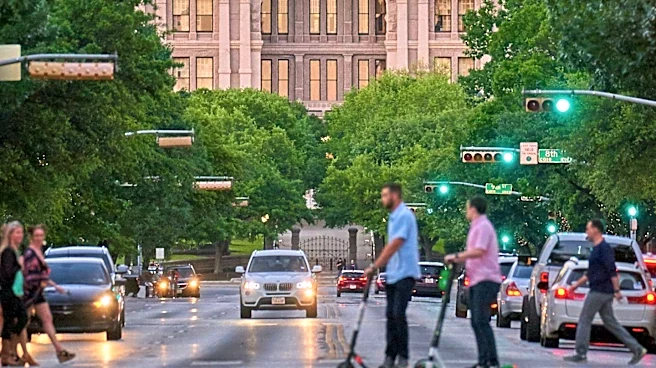
Texas is experiencing a moderation in its economic growth, leading to significant budget deficits for numerous local taxing entities across the state. This slowdown is not confined to local municipalities but is also affecting the Texas state government,
as evidenced by the governor's directive for all state agencies to reduce their budgets by 3%. Dave Gannon, Chair of the Bexar Central Appraisal District Board of Directors, notes that explanations for these shortfalls often incorrectly attribute them to falling property values or tax revenues. Instead, Gannon clarifies that appraisal values are generally stable or only slightly lower. The core issue is that current revenue levels are not meeting the financial growth projections that governments relied upon when committing to various projects during more prosperous times. This indicates a fundamental structural change in property appraisal fundamentals, suggesting that the period of consistent, rapid growth has likely ended.
Why It's Important?
The moderation of Texas's economic growth carries significant implications for public services and financial planning across the state. Local governments, which have historically benefited from robust property tax revenues driven by an expanding economy and increasing property values, are now facing budget constraints. This shift means that planned infrastructure projects, public services, and other government initiatives may need to be scaled back or re-evaluated. The state's Economic Stabilization Fund, or 'rainy day fund,' holding $27 billion, provides some financial flexibility at the state level, but local entities lack similar buffers. The situation highlights the vulnerability of local budgets to broader economic trends and the need for more conservative financial forecasting. Furthermore, the long-term impact on property owners, who have seen rising property tax bills and increasing homestead exemptions, could lead to renewed calls for tax reform and more sustainable revenue models.
What's Next?
In response to the slowing growth, San Antonio city leaders are currently debating raising taxes to expand the capacity of a projected 2027 bond, which is anticipated to be significantly smaller than previous programs. This debate reflects the broader challenge faced by municipalities in adapting to the new economic reality. The state's directive for budget cuts across agencies signals a statewide effort to adjust to moderated revenue expectations. Local taxing entities will likely need to explore various strategies, including re-prioritizing projects, seeking alternative funding sources, or implementing further cost-cutting measures. The structural changes in property appraisal fundamentals suggest that this moderation is not a temporary blip, implying a need for long-term adjustments in financial planning and public spending across Texas. The focus will be on how state and local leaders navigate these fiscal challenges while maintaining essential services and supporting community development.
Beyond the Headlines
The slowing economic growth in Texas, a state often lauded for its booming economy, could signal a broader shift in regional economic dynamics within the U.S. The commentary by Dave Gannon suggests that the 'Goldilocks' age of consistent, high growth and increasing purchasing power for taxing entities may be over. This development could prompt a re-evaluation of economic development strategies, focusing less on rapid expansion and more on sustainable growth and fiscal resilience. It also highlights the intricate relationship between real estate markets, construction activity, and government revenue, demonstrating how shifts in these areas can profoundly impact public finance. The situation in Texas could serve as a case study for other rapidly growing states, illustrating the importance of anticipating and planning for potential economic plateaus, and the need for robust financial reserves at all levels of government.