





What's Happening?
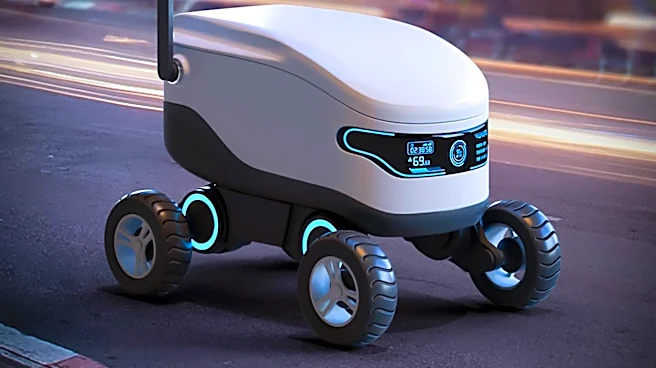
Serve Robotics Inc. (SERV), a San Francisco-based company specializing in autonomous sidewalk delivery robots, experienced a 7.02% drop in its stock price, closing at $2.12. This decline places the stock near its 52-week low of $2.03, reached on November
20. The company operates a fleet of approximately 2,000 robots across over 40 U.S. cities, partnering with DoorDash and Grubhub, and has expanded into hospital logistics with its Moxi robots. Despite a lack of a specific, verified news catalyst for the recent drop, the company faces ongoing scrutiny regarding its financial performance, including heavy losses and a small revenue base. Investors are anticipating the fourth-quarter and full-year 2026 report in March to assess whether delivery volumes and software revenue can support the projected $12 million revenue target. Management has indicated that growing orders from DoorDash and Grubhub, along with new Physical AI Services and hospital contracts, are expected to offset reduced Uber Eats volume ahead of its early-2027 wind-down.
Why It's Important?
The performance of Serve Robotics' stock is significant for the burgeoning physical AI and autonomous delivery sectors in the U.S. A sustained decline could signal investor apprehension regarding the profitability and scalability of such technologies, potentially impacting funding and market sentiment for other companies in this space. The company's reliance on partnerships with major delivery services like DoorDash and Grubhub highlights the critical role these collaborations play in the adoption and expansion of autonomous delivery. Furthermore, the expansion into hospital logistics with Moxi robots demonstrates a diversification strategy that could open new markets for AI-driven automation, influencing efficiency and cost structures in the healthcare sector. Regulatory decisions at the city level, such as the Chicago pilot program requiring City Council approval, underscore the regulatory hurdles and public acceptance challenges that autonomous delivery companies must navigate, which could either accelerate or impede their growth across U.S. urban centers.
What's Next?
The next significant event for Serve Robotics is the release of its fourth-quarter and full-year 2026 report in March. This report will be crucial for investors to evaluate the company's progress towards its $12 million revenue target and assess the effectiveness of its strategies to offset the reduction in Uber Eats volume. City-level regulatory decisions, particularly the Chicago pilot program's need for City Council approval beyond May 2027, will also be a key focus, as these decisions could set precedents for operations in other U.S. markets. The company's cash consumption rate and its liquidity cushion, which currently funds operations for approximately one year, will be closely monitored. Potential share issuance capacity also presents a risk of dilution for existing shareholders. Analyst sentiment remains divided, with some firms maintaining 'Buy' or 'Outperform' ratings, while others hold a 'Hold' position, indicating a mixed outlook on the company's future performance and potential for estimate revisions.
Beyond the Headlines
The trajectory of Serve Robotics extends beyond its immediate stock performance, touching upon broader implications for urban infrastructure, labor markets, and the ethical considerations of autonomous systems. The increasing deployment of sidewalk delivery robots raises questions about their integration into public spaces, potential impacts on pedestrian safety, and the need for clear regulatory frameworks that balance innovation with public interest. The shift towards autonomous delivery could also reshape the gig economy, potentially reducing the demand for human delivery drivers in the long term, which has significant socio-economic implications. Furthermore, the expansion of AI-powered robots into sensitive environments like hospitals, while promising efficiency gains, also brings forth discussions about data privacy, cybersecurity, and the human element in care services. The ongoing development and adoption of physical AI technologies like those from Serve Robotics represent a fundamental shift in how goods and services are delivered, prompting a re-evaluation of urban planning, employment models, and the societal role of automation.