




What's Happening?
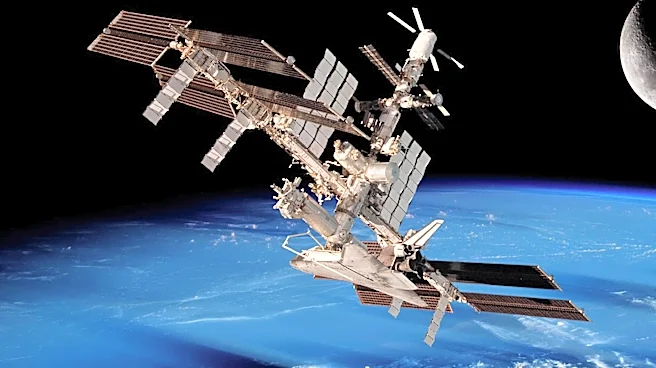
Honda and space infrastructure firm Redwire are partnering to develop an automated laboratory support system for upcoming commercial space stations. This collaboration aims to address the critical issue of limited astronaut time on space missions. Astronauts
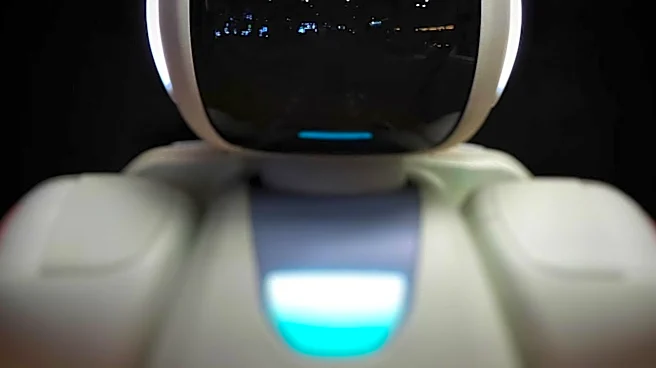
on the International Space Station (ISS) currently spend significant time on mundane tasks such as inventory management and biological sample handling. The new robotic system will feature Redwire's Space Technology Autonomous Agile Robotic Kit (STAARK), which provides reaching and motion capabilities, and Honda's advanced robotic grips with independently articulated fingers and tactile sensors. These technologies are designed to allow autonomous interaction with dynamic objects and precise manipulation of delicate items, ensuring that microgravity scientific experiments can continue even with smaller or uncrewed stations. The concept was introduced via a press release and will be presented at the International Astronautical Congress (IAC).
Why It's Important?
This development is crucial for the future of space exploration and commercialization, particularly as NASA plans to deorbit the ISS around 2030. Private companies like Axiom Space, Vast, and Orbital Reef are developing their own commercial space stations, which are expected to be smaller and potentially uncrewed for extended periods. Automation, therefore, becomes essential for maintaining scientific research operations. By automating routine laboratory tasks, the new robotic system will free up highly trained astronauts to focus on more complex and critical missions, maximizing the efficiency and scientific output of space stations. This initiative could significantly reduce operational costs and increase the volume of research conducted in microgravity, benefiting various scientific fields and potentially accelerating breakthroughs in space agriculture, materials science, and medicine. The success of such automated systems will be a key factor in the viability and expansion of the commercial space industry.
What's Next?
While the collaboration has been announced, there are no immediate agreements for the Redwire/Honda robotic setup to be adopted by any of the early commercial space stations, such as Haven-1 or Axiom Station, which could launch as early as next year. The companies will be showcasing their concept at the International Astronautical Congress (IAC) to generate interest and potential partnerships. The next steps will likely involve securing agreements with commercial space station operators and further developing and testing the integrated robotic system. As the commercial space industry grows, competition to provide advanced automation solutions for microgravity research is expected to intensify. The successful implementation of this technology could set a precedent for how future space stations are operated and managed, potentially leading to widespread adoption of similar automated systems across the burgeoning space sector.
Beyond the Headlines
The partnership between Honda and Redwire highlights a broader trend towards increased automation and robotics in space exploration, driven by the need for efficiency and the high cost of human presence in orbit. This shift has profound implications for the role of astronauts, potentially transforming them from primary operators to supervisors of advanced robotic systems. Ethically, this raises questions about the balance between human and artificial intelligence in space, and the long-term impact on human spaceflight programs. Legally, the development of autonomous systems for commercial space stations will necessitate new regulatory frameworks for safety, intellectual property, and operational standards. Culturally, the image of space exploration may evolve from one dominated by human heroics to one that increasingly features sophisticated robotic capabilities, pushing the boundaries of what is possible in extreme environments and potentially opening up space to a wider range of scientific and commercial endeavors.