





What's Happening?
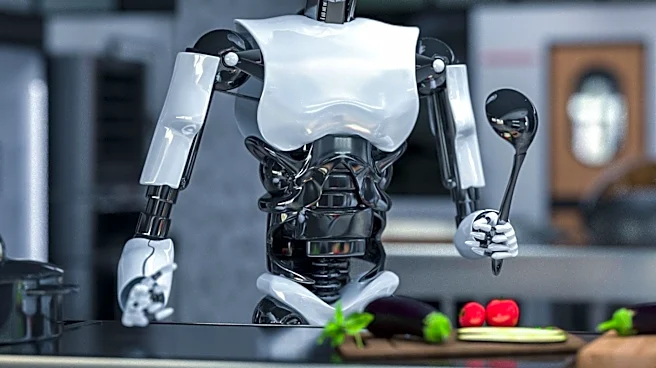
Artificial intelligence is increasingly being used by U.S. adults for Thanksgiving meal planning and cooking, with a recent Campbell's State of the Sides survey indicating that 27% of celebrants have used generative AI, up from 22% last year. Additionally,
65% of shoppers express interest in using AI for holiday meal planning, with 34% seeking new recipes, 23% for overall menu planning, and 16% for healthier meal options, according to FMI, the Food Industry Association. However, this trend is met with skepticism from culinary experts and food bloggers. Recipe blogger Eb Gargano describes AI-generated recipes as 'often total nonsense' and 'Frankenstein recipes,' noting that AI cannot cook or taste. Culinary educator Melanie Underwood also recounted an instance where a chatbot, when asked to scale a recipe and create a shopping list, cut out ingredients, claiming to improve the recipe. Critics warn that relying on AI for recipes risks eroding culinary traditions and human connection in cooking.
Why It's Important?
The growing reliance on AI for Thanksgiving meal planning highlights a significant shift in how U.S. consumers approach traditional activities, impacting both the food industry and cultural practices. For food bloggers and chefs, the rise of AI recipe summaries is causing a decline in traffic to their websites, threatening their livelihoods and the ecosystem of trusted culinary content. This shift could lead to a devaluation of human expertise in cooking and recipe development. For consumers, the unreliability of AI-generated recipes, as described by experts, poses practical challenges, potentially leading to disappointing or even disastrous holiday meals. This also raises questions about food safety if AI suggests incorrect ingredient combinations or cooking methods. The erosion of 'cultural oral histories' through cooking, as warned by Melanie Underwood, signifies a broader societal concern about the impact of AI on human traditions and interpersonal connections.
What's Next?
As AI tools become more sophisticated, there will likely be continued debate and development regarding their role in culinary arts. Food tech companies may focus on improving AI's ability to generate reliable and palatable recipes, potentially through more advanced training data or integration with human culinary review. Consumers might become more discerning in their use of AI for cooking, perhaps using it for inspiration rather than strict adherence. Food bloggers and culinary educators may need to adapt their strategies to emphasize the unique value of human experience, taste, and cultural context in cooking. There could also be a push for clearer labeling or disclaimers on AI-generated content to manage consumer expectations regarding reliability. The tension between convenience offered by AI and the preservation of human culinary traditions will likely continue to evolve.
Beyond the Headlines
The integration of AI into something as personal and culturally significant as holiday meal preparation touches upon deeper themes of authenticity, tradition, and the human experience. The concern that AI might 'fracture personal connections and family history' by reducing culinary traditions to chatbot prompts speaks to a broader anxiety about technology's impact on human relationships and cultural heritage. Cooking, especially for holidays like Thanksgiving, is often a communal activity rich with shared knowledge and emotional significance. When AI intervenes, it can streamline processes but potentially strip away the narrative and personal touch that make these traditions meaningful. This scenario prompts reflection on what aspects of human life we are willing to delegate to AI and what we deem essential to preserve as uniquely human, emphasizing the irreplaceable value of human creativity, intuition, and shared experience in cultural practices.