







What's Happening?
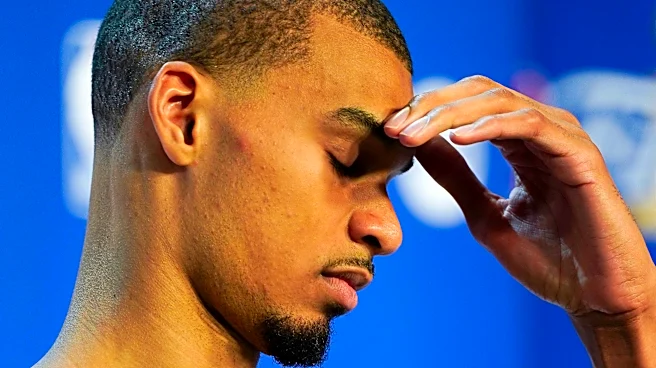
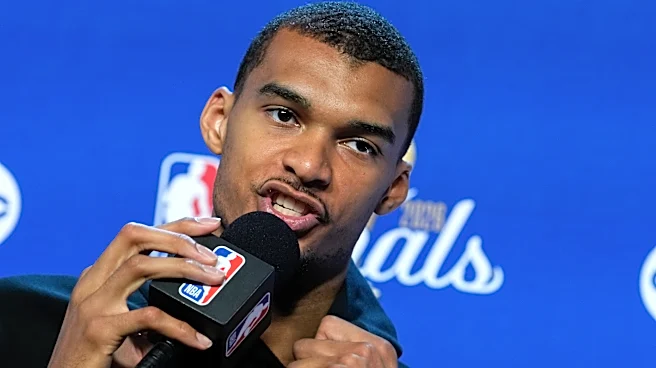
Victor Wembanyama, a standout player for the San Antonio Spurs, recently concluded his first NBA playoff run, which ended in a loss to the New York Knicks in the NBA Finals. Despite the defeat, Wembanyama's performance was notable, averaging 23.8 points,
10.9 rebounds, and 3.5 blocks over 22 playoff games. However, the Finals exposed certain areas where Wembanyama needs to improve to reach the next level of his career. Key areas identified include developing a go-to offensive move, improving endurance to maintain performance in the fourth quarter, and managing physicality to avoid fouls that could lead to suspensions.
Why It's Important?
Wembanyama's development is crucial for the Spurs' future success and his own career trajectory. As a young star, his ability to refine his skills and address weaknesses will determine his potential to lead his team to a championship. The Spurs' reliance on Wembanyama highlights the importance of his growth in maintaining their competitive edge. Additionally, his performance sets a benchmark for other young players entering the league, emphasizing the need for continuous improvement even at the highest levels of play.
What's Next?
Wembanyama is expected to focus on addressing the identified areas of improvement during the offseason. This includes working on a signature offensive move that can be relied upon in critical game moments, enhancing his physical conditioning to sustain energy throughout games, and learning to balance physical play without crossing into foul territory. The Spurs will likely support his development with targeted training and strategic adjustments to maximize his impact in future playoff runs.
Beyond the Headlines
Wembanyama's journey underscores the broader challenges faced by young athletes transitioning to professional sports. The pressure to perform at elite levels while managing personal development is significant. His experience highlights the importance of mentorship and support systems in nurturing young talent. Additionally, his case may influence how teams approach the development of their young stars, potentially leading to more comprehensive training programs that address both physical and mental aspects of the game.