






What's Happening?
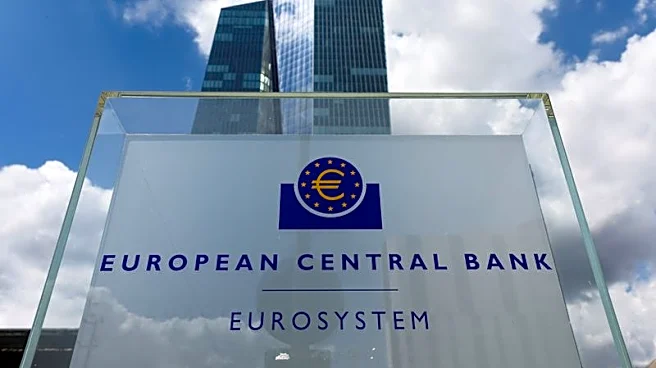
The European Central Bank's (ECB) Survey of Professional Forecasters (SPF) for the fourth quarter of 2026 indicates that core inflation expectations for the Eurozone remain unchanged at 2.4% for 2026. However, these expectations have been revised upwards
for subsequent years, reaching 2.5% for 2027 and 2.2% for 2028. Longer-term core inflation expectations are stable at 2.0%. The primary driver for these upward revisions is attributed to the indirect effects stemming from higher-than-anticipated energy price increases, particularly impacting non-energy industrial goods. While pass-through to services is expected to be contained, mainly affecting transport services, the overall headline inflation expectations have also seen upward revisions to 3.0% for 2026 and 2.6% for 2027, largely due to more persistent energy commodity prices and their indirect effects. The survey also notes that the perceived duration of the Middle East conflict and associated energy supply disruptions has lengthened, contributing to these revised forecasts.
Why It's Important?
These revised inflation expectations are significant for the U.S. and global economies as they signal persistent inflationary pressures in a major economic bloc. Higher inflation in the Eurozone could influence global trade dynamics, potentially affecting demand for U.S. exports and the competitiveness of U.S. goods. For U.S. businesses with operations or investments in Europe, increased inflation could lead to higher operational costs and reduced profit margins. Furthermore, the ECB's monetary policy decisions, which are heavily influenced by inflation outlooks, could have ripple effects on global financial markets, including those in the U.S. If the ECB adopts a more hawkish stance to combat inflation, it could strengthen the Euro against the U.S. dollar, impacting currency exchange rates and potentially making U.S. imports cheaper but exports more expensive. The prolonged energy price concerns also highlight the interconnectedness of global energy markets and geopolitical events, which can directly or indirectly affect U.S. energy costs and economic stability.
What's Next?
The ECB will closely monitor these inflation trends and their underlying causes, particularly the evolution of energy prices and geopolitical tensions. Future monetary policy decisions by the ECB will likely be shaped by whether these inflationary pressures prove temporary or more entrenched. Businesses and investors in the U.S. will need to track the ECB's actions and the Eurozone's economic performance, as these could influence investment strategies and market sentiment. The ongoing assessment of indirect and second-round effects of energy shocks will be crucial for central bankers and policymakers. If the Middle East conflict and its impact on energy markets persist as forecasters now expect, further adjustments to inflation outlooks and economic policies could be anticipated, potentially leading to continued volatility in global markets.
Beyond the Headlines
The upward revision in core inflation expectations, even if driven by indirect energy effects, underscores a broader challenge for central banks globally: managing inflation in an environment of persistent supply-side shocks and geopolitical instability. This situation highlights the limitations of traditional monetary policy tools when faced with non-demand-driven inflation. The extended duration of the Middle East conflict, as perceived by forecasters, suggests a shift in expectations regarding global stability and its economic consequences. This could lead to a re-evaluation of supply chain resilience and energy security strategies by governments and corporations worldwide, including in the U.S. The emphasis on 'indirect effects' rather than 'stronger pass-through' suggests that while initial price shocks are being absorbed, their secondary impacts are proving more pervasive, indicating a complex and evolving inflationary landscape that requires nuanced policy responses beyond simple interest rate adjustments.