






What's Happening?
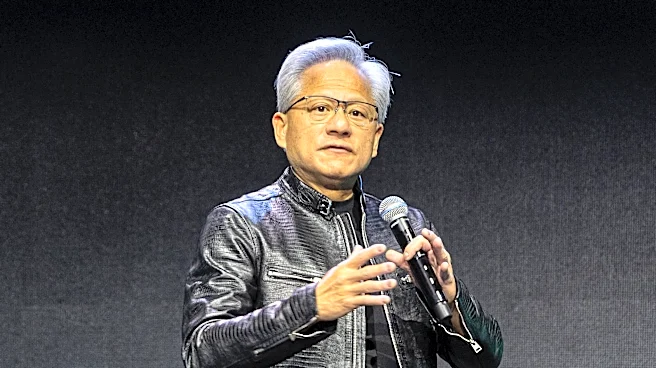
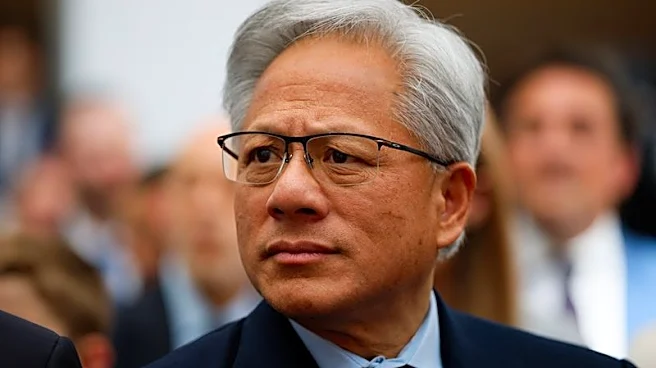
NVIDIA CEO Jensen Huang is currently under investigation following allegations of an extramarital affair with Alice Huang, who is accused of being a Chinese intelligence agent. This development has led to a drop in NVIDIA's stock price and has drawn the
attention of U.S. technology regulators. The U.S. government has been actively restricting the sale of advanced chips to China to maintain its technological edge, making the alleged involvement of a Chinese agent particularly sensitive. Alice Huang has reportedly been under investigation by the U.S. for years. The incident has prompted Congress to request an explanation from Jensen Huang regarding his interactions with Alice Huang and how NVIDIA protects itself against foreign espionage. Furthermore, there are reports that an NVIDIA executive attempted to halt an investigation into the company's relationship with Megaspeed, a Southeast Asian company accused of exporting NVIDIA chips into China despite sanctions.
Why It's Important?
This investigation carries significant implications for NVIDIA, the broader AI industry, and U.S. national security. NVIDIA is the dominant supplier of high-end chips essential for AI and data centers, holding an estimated market share of over 80%. The alleged foreign intelligence effort, if proven, could expose vulnerabilities in U.S. technology companies and compromise national security interests related to AI development. The U.S. government has explicitly aimed to restrict China's access to advanced chips, and any circumvention of these sanctions, potentially aided by an insider, would undermine these efforts. For NVIDIA, a company whose value has soared with the AI boom, the scandal has already caused a decline in its stock price. A criminal investigation and increased regulatory scrutiny could severely impact its operations, sales pipeline, and reputation. The incident also raises questions about corporate governance and the potential for foreign influence within critical technology sectors, potentially leading to stricter oversight and compliance requirements for companies operating in sensitive areas.
What's Next?
The immediate next steps involve ongoing investigations by U.S. authorities and Congress. Jensen Huang is expected to provide explanations regarding his interactions and NVIDIA's security protocols. The outcome of these investigations could lead to significant regulatory actions, including potential fines, stricter export controls, or even criminal charges if illicit activities are confirmed. NVIDIA may face pressure to implement more robust internal security measures and compliance frameworks to prevent future foreign intelligence infiltration. The company's sales to China, already under restriction, could face further tightening, potentially impacting its revenue streams. The broader AI sector will also be watching closely, as any disruption to NVIDIA's chip supply could have ripple effects on AI development and investment. Investors will continue to monitor the situation, and the company's stock performance will likely remain volatile until there is greater clarity on the investigation's findings and consequences.
Beyond the Headlines
The allegations against Jensen Huang and the subsequent investigation highlight the escalating geopolitical competition in the technology sector, particularly concerning artificial intelligence. The incident underscores the dual-use nature of advanced technologies like AI chips, which are crucial for both economic growth and national security. It also brings to light the complex challenges of enforcing export controls and preventing intellectual property theft in a globally interconnected economy. The ethical dimension of corporate leadership is also under scrutiny, as the personal conduct of a CEO can have far-reaching consequences for a company's market value, regulatory standing, and national security implications. This event could trigger a broader re-evaluation of how U.S. technology companies manage relationships with foreign entities and protect against espionage, potentially leading to a more stringent regulatory environment and increased scrutiny of executive conduct in critical industries.