




What's Happening?
Drew Carey, known for his roles in 'The Drew Carey Show' and 'The Price Is Right,' has shared insights into various aspects of his career and personal life. According to TV Insider, Carey revealed in a 2004 interview with Ellen DeGeneres that he continued
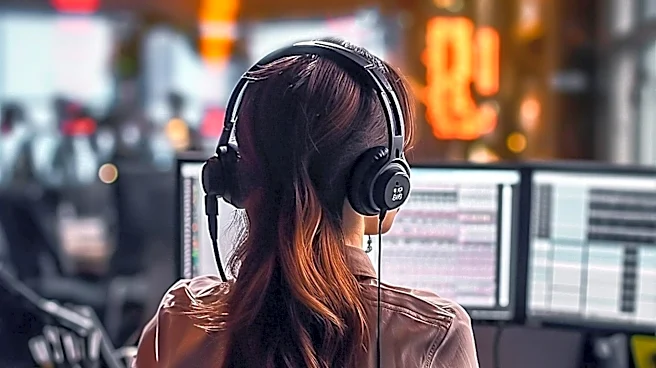
to wear his signature thick-rimmed glasses even after undergoing LASIK surgery, stating they were 'fake' at that point. More recently, in 2023, Carey experimented with an AI-generated version of his voice for his SiriusXM radio show, 'Friday Night Freakout.' He used ElevenLabs for voice duplication and ChatGPT for scripting the AI's banter. However, listeners reportedly complained that the AI double sounded 'soulless,' leading Carey to reflect on the importance of human personality in radio, as he told Engadget.
Why It's Important?
Carey's revelation about his glasses highlights the deliberate crafting of a public persona, a common practice in entertainment that can influence audience perception and brand identity. His decision to maintain the glasses, despite no longer needing them for vision, underscores the power of visual branding. The experiment with AI on his radio show is particularly significant as it touches upon the evolving landscape of media and technology. It demonstrates the potential, and current limitations, of artificial intelligence in creative fields. The negative listener feedback regarding the 'soulless' AI voice suggests that while AI can replicate human functions, it often struggles to capture the nuanced emotional connection and personality that audiences value in human entertainers. This has broader implications for the entertainment industry as it grapples with integrating AI while preserving authentic human engagement.
What's Next?
The experience with his AI-generated voice is likely to inform Carey's future decisions regarding technology in his media projects. While he acknowledged the shortcomings of the AI experiment, the broader trend of AI integration in entertainment is expected to continue. Other media personalities and production companies may learn from Carey's experience, potentially focusing on AI applications that augment human creativity rather than attempting to fully replace human presence. The incident also opens a discussion about the future role of human DJs and hosts in an increasingly automated world, emphasizing the unique value of human connection and personality in broadcasting. For Carey himself, it reinforces the importance of his authentic voice and persona to his audience.
Beyond the Headlines
Carey's dual anecdotes—the fake glasses and the AI voice experiment—offer a fascinating look into the intersection of authenticity, public image, and technological advancement in the entertainment industry. The 'fake' glasses symbolize the constructed nature of celebrity, where elements of a persona are maintained for audience recognition and comfort, even when their original purpose is gone. The AI voice experiment, on the other hand, delves into the ethical and artistic implications of artificial intelligence. It raises questions about what constitutes 'authenticity' in a digital age and whether technology can truly replicate the human element that fosters connection. This ongoing tension between technological capability and human preference will likely shape the future of media consumption and creation, prompting deeper considerations about the value of human artistry and presence.