






What's Happening?
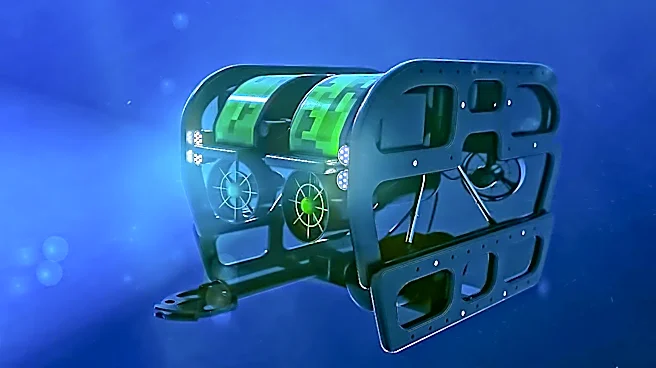
Japan is set to initiate full-scale test mining of rare-earth-rich mud from the deep seabed off Minamitori Island, located approximately 1,900 km southeast of Tokyo, starting February 2, 2027. This 50-day test will be followed by a comprehensive evaluation,
including an assessment of economic feasibility, according to Shoichi Ishii, program director of the Cabinet Office’s national platform for innovative ocean developments. The findings from this project are expected to be compiled into a report by March 2028. The project has received a cumulative budget of about 50 billion yen ($314 million) from April 2018 through March 2027. Earlier analysis of retrieved mud indicated that medium and heavy rare earth elements constitute about 54% of its total rare-earth content. Japan successfully retrieved rare-earth-rich mud from depths of around 6 km in February 2026.
Why It's Important?
This initiative is a critical component of Japan's strategy to reduce its significant reliance on China for critical minerals, especially as Beijing continues to tighten controls on rare-earth supplies. The project aims to secure a stable and diversified supply of rare earths, prioritizing this goal over immediate economic feasibility. The collaboration with the U.S. to share research and development results further underscores the international significance of this effort in diversifying global supply chains for critical minerals. The sharp increase in the price of yttrium, a heavy rare earth subject to Chinese export controls since 2025, which has seen its price surge 180-fold, highlights the urgency and strategic importance of Japan's seabed mining venture. Success in this endeavor could significantly alter the global rare earth market dynamics and enhance supply chain resilience for numerous high-tech industries.
What's Next?
Following the 50-day test mining operation, a comprehensive evaluation will be conducted, focusing on both technical and economic feasibility. The results will be compiled into a report by March 2028, which will inform future decisions regarding the commercial viability and scalability of deep-sea rare earth mining. Japan and the U.S. will share their research and development findings, potentially leading to further collaborative efforts in this strategic sector. The project aims to identify obstacles in transitioning from research and development to commercial operations. The long-term goal is to establish a domestic source of rare earths, thereby reducing geopolitical risks associated with concentrated supply chains and ensuring a more stable supply for critical industries.
Beyond the Headlines
The pursuit of deep-sea mining for rare earths raises significant environmental and ethical considerations. The potential impact on deep-sea ecosystems, which are largely unexplored and fragile, is a major concern. Environmental groups and scientists will likely scrutinize the project's ecological footprint, demanding robust mitigation strategies and transparent reporting. Legally, the international framework for deep-sea mining is still evolving, and Japan's actions could influence future regulations and norms. Economically, if successful, this project could shift global power dynamics in the critical minerals sector, potentially reducing China's leverage and fostering greater resource independence for nations like Japan and the U.S. This initiative also highlights a broader global trend of nations seeking to secure critical resources through unconventional and technologically advanced methods, driven by geopolitical tensions and the demands of the green energy transition.