









What's Happening?
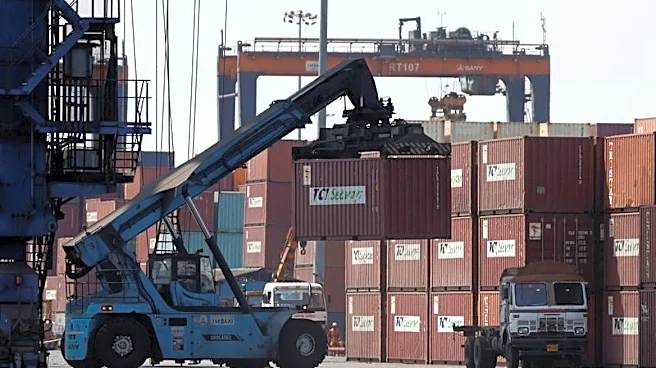
According to S&P Global Market Intelligence, U.S.-bound containerized freight imports saw an annual increase in May for the first time in 13 months. The imports rose by 13.5% annually, reaching 2.58 million Twenty-Foot Equivalent Units (TEUs), and surpassed
April's figures by 5.4%. This growth is attributed to early Peak Season shipping, likely influenced by Amazon's Prime Day promotions occurring earlier than usual. The increase also reflects a strategic move by importers to front-load inventory ahead of potential Section 301 tariffs expected by late July. Consumer durables imports saw a significant 44% annual gain, driven by a 65.2% increase in home furnishings and an 18% rise in leisure goods. However, consumer electronics, which are not subject to tariffs, experienced a decline.
Why It's Important?
The rise in U.S.-bound imports suggests a shift in trade dynamics, potentially signaling a recovery in consumer demand and economic activity. The early Peak Season shipping and inventory front-loading indicate businesses are preparing for upcoming tariff changes, which could impact pricing and availability of goods. The increase in consumer durables imports highlights a robust demand for certain goods, although the decline in consumer electronics suggests variability across sectors. This development could affect U.S. industries reliant on imports, influencing pricing strategies and inventory management. The potential imposition of new tariffs could further complicate trade relations and economic stability.
What's Next?
As the U.S. approaches the potential implementation of Section 301 tariffs, businesses may continue to adjust their import strategies to mitigate risks. The impact of these tariffs on consumer prices and supply chains will be closely monitored. Additionally, the ongoing trade dynamics could prompt further policy discussions and adjustments by the U.S. government to address trade imbalances and support domestic industries. Stakeholders, including importers and retailers, will need to navigate these changes carefully to maintain competitiveness and meet consumer demand.