


What's Happening?
Volkswagen has revised its 2026 outlook, citing weaker earnings and intense competition, particularly from China, as key factors. The company's half-year results revealed an operating result approximately 12% below the previous year, prompting a forecast
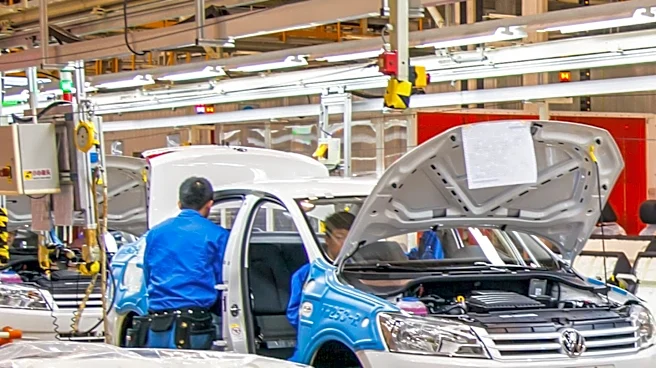
of group sales revenue to be between 3% lower and unchanged year-on-year. Despite expectations of improved margins in the second half, Volkswagen faces significant pressure across its markets and brands. Reports suggest potential job cuts affecting up to 100,000 positions and four German plants, although these remain unconfirmed by the company. The competitive landscape in China, now the world's most intense electric-vehicle market, poses additional challenges as Volkswagen must defend its market share while investing in new technologies and models.
Why It's Important?
The developments at Volkswagen highlight the broader challenges facing the European automotive industry, particularly in adapting to the rapid growth of the electric vehicle market. The pressure from Chinese competitors, who benefit from integrated supply chains and strong domestic scale, underscores the need for European carmakers to innovate and restructure. Volkswagen's situation reflects the delicate balance between maintaining profitability and investing in future technologies. The potential job cuts and plant closures could have significant economic and social impacts, particularly in regions heavily reliant on automotive manufacturing. This scenario also raises questions about Europe's industrial strategy and its ability to compete globally in the evolving automotive landscape.
What's Next?
Volkswagen's management anticipates a stronger second half, contingent on new model launches and measurable savings. However, the company must navigate complex negotiations with employee representatives and regional governments regarding potential job cuts and plant closures. The outcome of these discussions will be crucial in determining Volkswagen's ability to adapt to market pressures. Additionally, Europe's policy decisions on tariffs, emissions rules, and infrastructure development will play a significant role in shaping the future of the automotive industry. Volkswagen's next steps will be closely watched as an indicator of how European carmakers can manage the transition to electric vehicles while maintaining competitiveness.