


What's Happening?
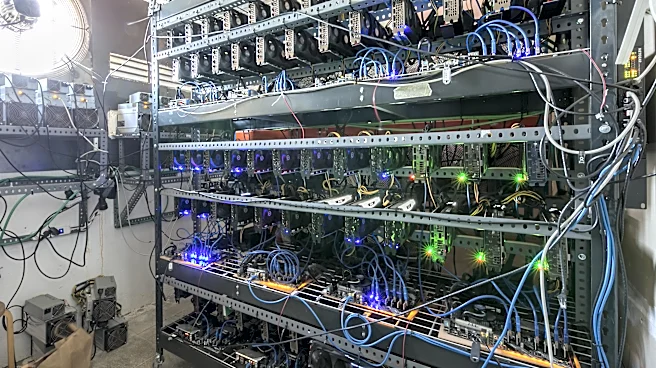
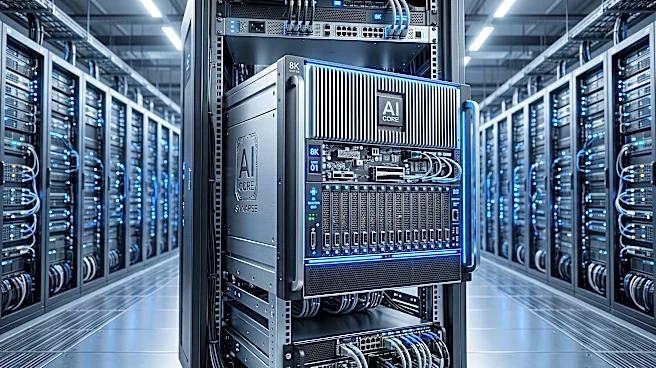
Cipher Digital, formerly known as Cipher Mining, has undergone a significant strategic shift, moving away from self-mining Bitcoin to focus on developing and operating industrial-scale data centers for high-performance computing (HPC) and artificial intelligence
(AI) workloads. This transition has seen the company report its first HPC lease revenue from its Black Pearl campus. Furthermore, Cipher Digital has extended its Barber Lake lease to a 20-year term, which has substantially increased the contracted revenue for that site to approximately $9.1 billion. Across its three contracted campuses, the company's management indicates a total capacity of about 700 megawatts and approximately $16.6 billion in contracted revenue. This pivot is driven by the understanding that AI and HPC workloads can generate roughly double the revenue per megawatt-hour compared to Bitcoin mining, making the reallocation of existing power capacity to deeper-pocketed tenants an attractive business proposition.
Why It's Important?
This strategic pivot by Cipher Digital highlights a broader trend within the digital asset industry, where companies with significant power infrastructure are re-evaluating their business models to capitalize on the booming demand for AI and HPC. The shift underscores the increasing recognition that the primary constraint for AI development is no longer just silicon, but the availability of robust power connections and physical space to house the necessary computing infrastructure. For Cipher Digital, securing long-term contracts totaling billions in revenue provides significant financial stability and a clear growth trajectory in a high-demand sector. This move also signals to investors and the market that existing Bitcoin mining infrastructure can be repurposed for more lucrative and stable revenue streams, potentially influencing other miners to consider similar transitions. The company's ability to leverage its existing assets for AI workloads positions it to benefit from the substantial investments being made in AI infrastructure across various industries.
What's Next?
Cipher Digital's immediate future will involve the continued buildout and operationalization of its industrial-scale data centers to fulfill its substantial contracted revenue pipeline. The company will need to manage the significant capital requirements for these projects, including addressing concerns over potential cost overruns and the implications of its $850 million zero-coupon convertible note offering. As the legacy Bitcoin mining operations wind down, the company will aim to fully transition its revenue streams towards HPC and AI leases. The market will closely watch for further reports on HPC lease revenues and progress in data center development. Successful execution of these projects could solidify Cipher Digital's position as a key infrastructure provider in the AI sector, potentially attracting more investment and partnerships. Conversely, any delays or significant cost overruns could impact investor sentiment, which has already seen the stock fall more than half from its 52-week high.
Beyond the Headlines
The transformation of Cipher Digital from a Bitcoin miner to an AI data center operator reflects a significant evolution in how digital infrastructure assets are valued and utilized. This shift points to a future where the physical infrastructure initially developed for cryptocurrency mining could become a critical backbone for the AI revolution. It also raises questions about the long-term viability and profitability of pure Bitcoin mining operations, especially as the energy demands of AI continue to escalate. The strategic move by companies like Cipher Digital could lead to a broader consolidation or repurposing of energy-intensive digital asset infrastructure, driving innovation in energy management and data center design. This trend also highlights the increasing convergence of different technological sectors, where assets and expertise from one domain can be strategically redeployed to meet the demands of another, creating new economic opportunities and challenges.