





What's Happening?
The European Bank for Reconstruction and Development (EBRD) has announced a loan of up to €55 million ($88.6 million) to support Asarel Medet's copper mining operations and renewable energy investments in Bulgaria. This financing, approved on March 25
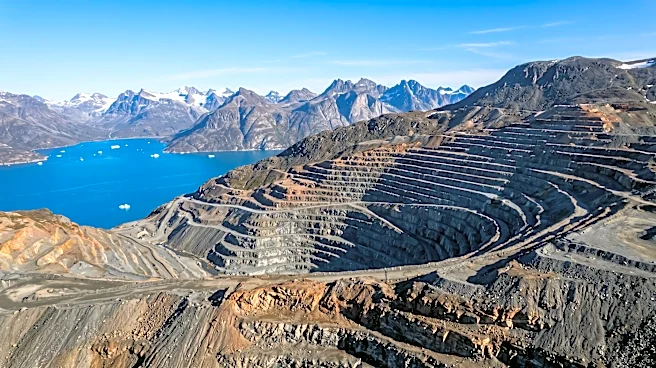
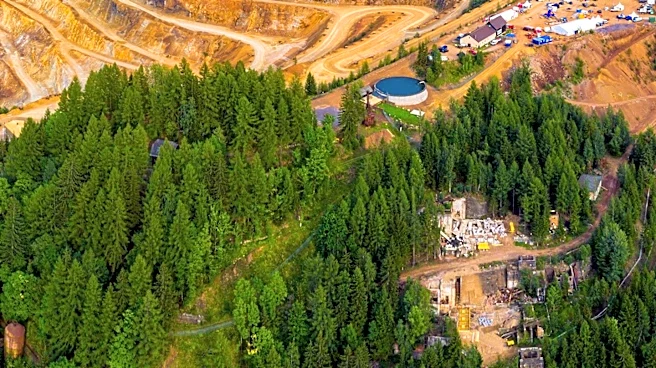
and announced on October 5, will fund sustaining capital expenditure and exploration at the Asarel Copper Mine in Panagyurishte. A significant portion of the loan will also be directed towards renewable electricity generation for the company's operations, specifically including four proposed solar plants with a combined capacity of approximately 28 megawatts. The broader investment program, totaling €135.1 million, aims to improve operating efficiency and reduce emissions associated with electricity consumption, with 68% of the EBRD's financing classified as green finance. The project also includes an environmental and social action plan and improvements to corporate governance, particularly compliance policies and procedures. Asarel Medet, a privately owned company, operates an open-pit mine and produces copper concentrate for European markets.
Why It's Important?
This EBRD loan is important as it highlights the growing global emphasis on sustainable mining practices and the integration of renewable energy into industrial operations. While the loan is for a Bulgarian company, it reflects a broader trend that impacts U.S. mining companies and investors. U.S. firms involved in international mining or those seeking to adopt greener practices domestically can draw lessons from such initiatives. The classification of 68% of the financing as 'green finance' underscores the increasing financial incentives and regulatory pressures for industries to reduce their environmental footprint. This could influence U.S. policy and investment in sustainable mining technologies and renewable energy integration. Furthermore, copper is a critical mineral for various U.S. industries, including electronics, construction, and renewable energy technologies. Ensuring a stable and sustainably sourced supply of copper from international partners like Bulgaria is vital for U.S. economic and strategic interests. The project's focus on improving operating efficiency and reducing emissions aligns with global efforts to combat climate change, which has direct implications for U.S. climate policy and corporate sustainability goals.
What's Next?
Following the announcement, Asarel Medet will proceed with the implementation of the investment program, including the development of the four proposed solar plants and continued capital expenditure and exploration at the Asarel Copper Mine. The project record indicates that outstanding environmental approval for pit deepening and local permitting requirements for the solar developments still need to be addressed. The EBRD will likely monitor the progress of these environmental and social action plans, as well as the improvements in corporate governance. The success of this project could serve as a model for future green financing initiatives in the mining sector, potentially influencing how other international financial institutions and private investors approach similar projects. For the U.S., the development of more sustainable copper mining operations abroad could contribute to a more secure and environmentally responsible supply chain for critical minerals. The project's outcomes will be closely watched by stakeholders interested in the intersection of resource extraction, renewable energy, and sustainable development.
Beyond the Headlines
The EBRD's loan to Asarel Medet for copper mining and renewable energy integration signifies a deeper trend towards 'green industrialization' within the global economy. This initiative goes beyond mere compliance, aiming to fundamentally transform resource extraction into a more sustainable process. For the U.S., this has implications for its own domestic mining industry, which faces increasing pressure to adopt environmentally friendly practices. The project highlights the potential for financial institutions to drive this transition by tying funding to specific sustainability metrics and governance improvements. It also underscores the strategic importance of critical minerals like copper in the global energy transition, as demand for these materials is expected to surge with the expansion of renewable energy technologies and electric vehicles. The challenges of securing environmental approvals and local permits, as noted in the project record, reflect the complex interplay between economic development, environmental protection, and community engagement—a dynamic that is equally relevant in the U.S. The success of such projects could set precedents for international standards in responsible mining and resource management, influencing global supply chains and trade policies.