





What's Happening?
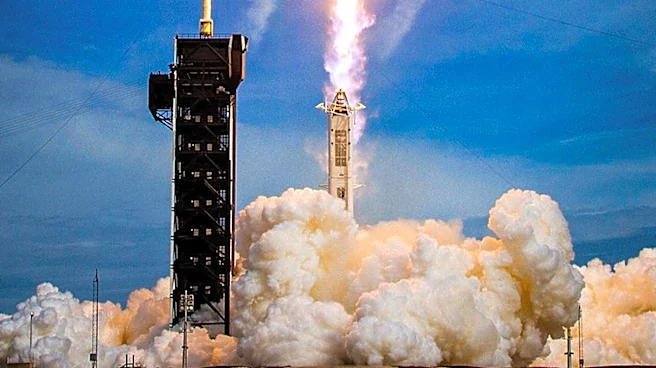
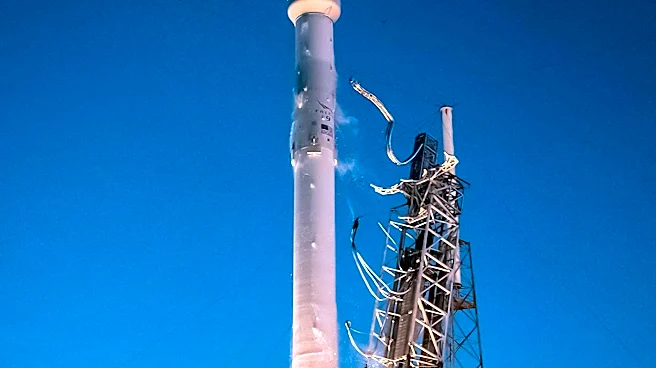
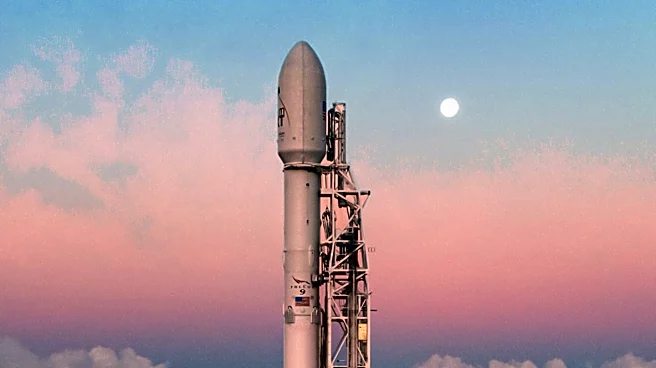
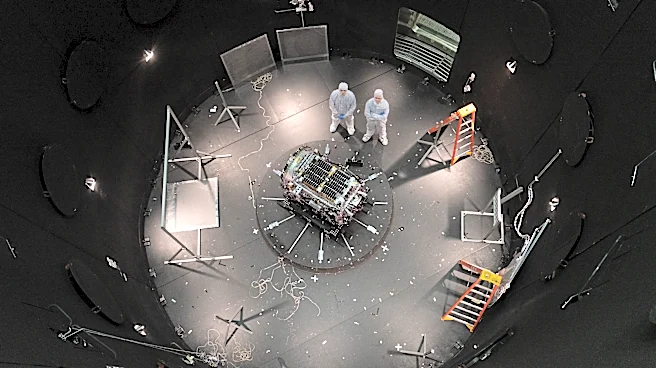
SpaceX conducted a significant launch from Cape Canaveral, Florida, deploying 29 Starlink satellites and two Besxar semiconductor Fabships using its Falcon 9 rocket. This mission, part of SpaceX's aggressive 2026 schedule, marks the 62nd Starlink mission of the year,
with the company aiming for a launch every three days. The Falcon 9's first stage was used to test the recovery of industrial payloads, a new venture for SpaceX, which could open opportunities for selling or sharing launch slots with industrial research payloads. The launch is also notable as SpaceX prepares for its inclusion in the Nasdaq-100 index, with its stock trading at $162, a 20% increase from its IPO price.
Why It's Important?
The inclusion of SpaceX in the Nasdaq-100 index is a significant milestone, reflecting its growing influence in the aerospace and technology sectors. This move is expected to attract more investment, as the index is followed by over 200 investment products globally. The successful test of semiconductor Fabships could revolutionize the semiconductor manufacturing process by utilizing space conditions for production, potentially impacting the global chip supply chain. This development is crucial as industries face increasing demand for semiconductors, driven by advancements in AI and other technologies.
What's Next?
SpaceX's continued success with its Starlink missions and the potential for new industrial applications could lead to further innovations in space-based manufacturing. The company's entry into the Nasdaq-100 is likely to increase its visibility and attract more investors. Additionally, the ongoing partnership with Besxar for semiconductor testing could lead to breakthroughs in chip manufacturing, offering a competitive edge in the tech industry.