


What's Happening?
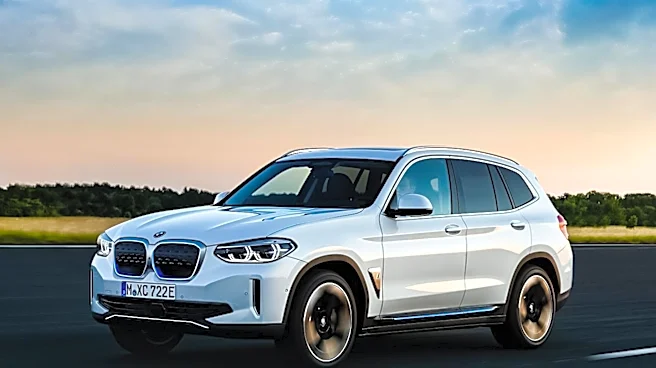
BMW has commenced series production of sixth-generation (Gen6) high-voltage battery packs for electric vehicles at its new $700 million assembly plant in Woodruff, South Carolina. This facility, located just 15 miles from BMW's Spartanburg car factory,
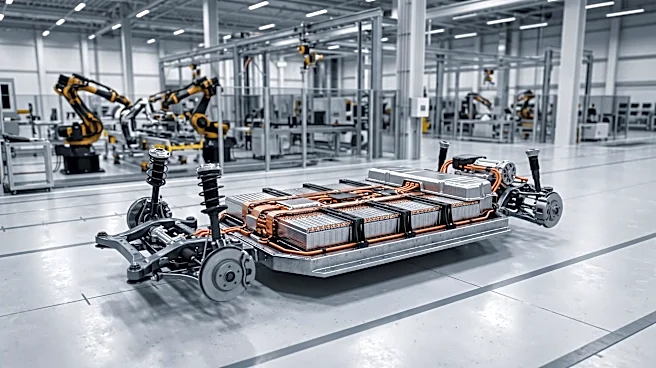
will supply batteries for U.S.-made Neue Klasse EVs, starting with the new iX5 SUV. The Woodruff plant is the fourth site in BMW's global Gen6 battery production network to begin series production. Construction of the plant began in September 2023, with manufacturing equipment installed by September 2024, and pre-series batteries rolling off the assembly line in summer 2025. The plant does not build cells from scratch but sources ready-made Gen6 cylindrical cells from local suppliers like LG Energy Solution in the U.S. The production process involves rigorous cell checks, clustering, and continuous real-time monitoring to ensure zero-defect batteries. The plant employs over 300 individuals and utilizes approximately 250 robots, along with AI-powered digital assistants, for its operations. Notably, the facility operates without fossil fuels during normal operation, and its industrial trucks are hydrogen-powered.
Why It's Important?
This move by BMW signifies a strategic shift towards localizing electric vehicle component production within the United States, strengthening supply chains and potentially reducing transportation costs for the automaker. The $700 million investment in the Woodruff plant, part of a larger $1.7 billion U.S. investment, underscores a commitment to American manufacturing and the growing EV market. By bringing battery production closer to vehicle assembly, BMW aims to enhance flexibility and responsiveness to market demands. This localization also creates significant opportunities for the American workforce, driving demand for skilled professionals in manufacturing, automation, quality control, and supply chain management. The plant's reliance on local suppliers for battery cells further supports the domestic EV ecosystem. Furthermore, the plant's fossil-fuel-free operation and the use of Gen6 cylindrical cells with 28% fewer carbon dioxide emissions compared to previous generations highlight a commitment to sustainability and environmental responsibility in the automotive industry.
What's Next?
The Woodruff plant is set to supply finished battery packs for at least six fully electric Neue Klasse models assembled at BMW's Spartanburg plant by 2030, following the initial supply for the iX5 SUV. This indicates a sustained increase in domestic EV production and a deeper integration of U.S.-based manufacturing into BMW's global strategy. The continued localization of battery production by automotive original equipment manufacturers (OEMs) is expected to drive further demand for manufacturing engineers, automation specialists, maintenance technicians, and other skilled labor. This trend could also extend opportunities to Tier 1 and Tier 2 suppliers within the U.S., fostering a more robust domestic EV supply chain. The success of BMW's investment in South Carolina may encourage other automakers to follow suit, further solidifying the U.S. as a key hub for EV manufacturing and innovation.
Beyond the Headlines
The establishment of BMW's battery plant in South Carolina reflects a broader industry trend towards 'nearshoring' or 'reshoring' critical manufacturing capabilities, particularly in the electric vehicle sector. This strategy is driven by a desire to mitigate geopolitical risks, reduce reliance on overseas supply chains, and capitalize on government incentives aimed at boosting domestic production. The plant's advanced manufacturing techniques, including virtual reality training for staff and the extensive use of AI-powered digital assistants and robots, point towards the future of industrial production, emphasizing efficiency, precision, and a highly skilled workforce. The commitment to fossil-fuel-free operations and reduced carbon emissions in battery production also highlights the increasing importance of sustainability as a core business principle, influencing not only product design but also manufacturing processes. This development could serve as a model for other industries seeking to balance economic growth with environmental stewardship.